
How High Should a TV Be Mounted? A Practical Guide for Comfortable Viewing
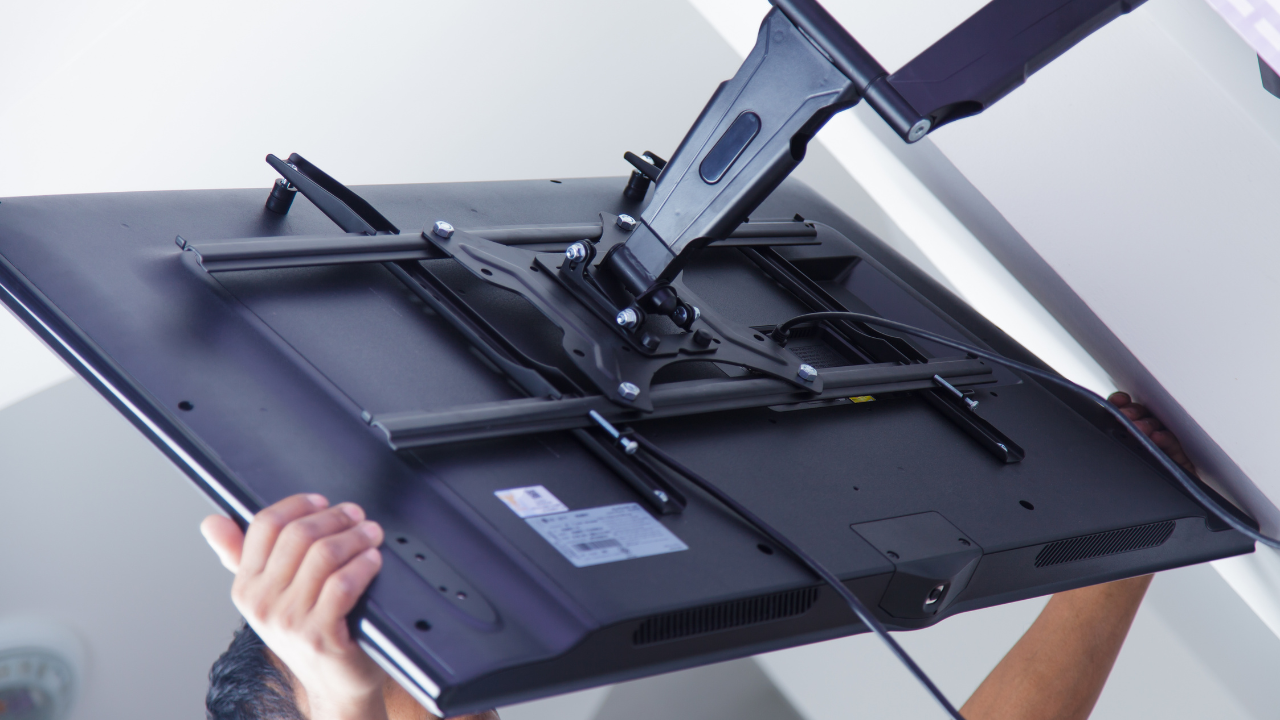
Mounting a TV at the wrong height can turn an otherwise great entertainment setup into an uncomfortable one. If the screen is too high, you may find yourself tilting your head upward for hours. Too low, and the television can look awkward or interfere with furniture.
So, how high should a TV be mounted?
For a typical living room, the center of the TV screen is often positioned about 42 to 48 inches from the floor. That range works well for many people sitting on a standard sofa, but there is no single height that fits every room. Seating height, viewing distance, TV size, furniture placement, wall layout, and the type of mount all matter.
The goal is simple: position the screen so you can watch comfortably without constantly looking up or down.
What Is the Ideal Height for a Wall-Mounted TV?
A good starting point is to place the center of the television approximately 42 to 48 inches above the floor.
This measurement refers to the middle of the screen, not the bottom edge of the TV.
For example, a larger television will naturally extend farther above and below its center point than a smaller one. That means two TVs mounted with their centers at exactly the same height can have noticeably different bottom and top edges.
Before drilling, sit in your normal viewing position and look straight ahead. The center portion of the screen should feel naturally aligned with your seated eye level.
This approach is more useful than choosing a mounting height based only on TV size.
Why Viewing Position Matters More Than TV Size
TV size gets a lot of attention when people plan a wall mount, but your seating position may be even more important.
Consider these factors before deciding where to place the screen:
• Height of your sofa or chairs
• Distance between the seating area and wall
• Whether you normally sit upright or recline
• Height of nearby furniture
• Location of electrical outlets and connections
• Position of a soundbar
• Wall features such as fireplaces, cabinets, or built-ins
A television that feels perfectly positioned in one room may feel too high or too low in another.
The best TV mounting height is therefore based on how the room is actually used rather than a universal measurement.
How to Measure TV Mounting Height Before Drilling
A little planning can prevent a lot of frustration.
Start by measuring the height of your normal seated eye level from the floor. Then consider where the center of the TV screen will sit.
It can also help to temporarily mark the proposed screen position on the wall using painter's tape. Step back, sit down, and look at the marked area from your usual viewing position.
Ask yourself:
• Does the center of the screen feel naturally positioned?
• Will the TV interfere with furniture or décor?
• Is there enough space below the screen for a soundbar?
• Will the viewing angle work from your primary seating area?
• Are the power and connection points accessible?
This simple test can reveal problems before any holes are drilled.
Should a TV Be Mounted at Eye Level?
For a typical living room, mounting the TV around seated eye level is a useful starting point.
The TV does not necessarily need to be positioned so the entire screen is at eye level. Instead, the center of the screen is the key reference point.
TV Mounting Dallas notes that seating distance, furniture height, and room layout can change the ideal position, so homeowners should measure their own space rather than relying on a fixed number.
This becomes especially important in rooms where the television cannot be placed at a conventional height.
How High Should a TV Be Mounted Above a Fireplace?
A fireplace creates one of the most common TV mounting challenges because the available wall space often forces the television higher than normal seated eye level.
In this situation, the priority is to balance the architectural layout with comfortable viewing.
A tilting TV mount can be particularly useful when the screen has to sit higher. Tilting mounts are designed to adjust the viewing angle and can help reduce glare or improve the viewing position from higher mounting locations.
Heat is another consideration. The fireplace, wall material, mounting hardware, and cable routing all need to be considered before installation.
If your TV is going above a brick, stone, or tile fireplace, the mounting method also needs to account for the wall surface. Different materials require appropriate anchors and installation techniques.
Does TV Mount Type Affect the Best Height?
Yes. The type of TV mount can influence how the finished installation feels.
A fixed mount keeps the TV close to the wall and creates a low-profile appearance. This can work well when the screen is positioned at a comfortable height and does not need adjustment.
A tilting mount allows the screen angle to be changed and can be useful when the TV needs to sit higher than normal.
A full-motion mount provides even more flexibility because the screen can swivel and extend away from the wall. This can be useful when viewers sit in different parts of the room.
The right choice depends on the room layout and viewing habits. TV Mounting Dallas offers fixed, tilting, full-motion, ceiling, and mantel mounting solutions for different installation situations.
Don't Forget the Soundbar
A TV can be mounted at the right height and still feel poorly planned if the soundbar is added afterward.
A soundbar is generally positioned directly below or above the TV and as close to the center of the screen as practical. Keeping the audio source aligned with the display helps the sound feel connected to what is happening on screen.
If you plan to install a soundbar, decide on its location before finalizing the TV height.
A soundbar can be mounted directly beneath a wall-mounted television, attached to the TV mounting system, or mounted separately depending on the equipment and wall surface.
You can learn more about professional soundbar installation and mounting if audio is part of your setup.
TV Height and Cable Management Should Be Planned Together
The position of the television also affects where cables need to go.
A wall-mounted TV may require HDMI, power, audio, network, or other connections. Leaving all of those cables hanging below the display can undermine the clean appearance that made wall mounting attractive in the first place.
Depending on the wall and installation requirements, cables may be routed inside the wall or managed with an external track. TV Mounting Dallas provides both in-wall cable running and external cable management options for mounted TVs.
Planning cable routing before mounting the TV is much easier than trying to redesign the setup afterward.
For a cleaner finished installation, consider professional cable management alongside the TV mount.
What About the Wall Itself?
The wall material matters just as much as the height.
TV Mounting Dallas installs on several wall types, including drywall, plaster, brick, stone, tile, wood, metal studs, and concrete. The appropriate mounting approach depends on the structure and material.
Stud placement is also important. For larger TVs, the company's FAQ recommends having mounting points land on solid framing, typically wood or metal studs, rather than relying solely on drywall anchors.
That means choosing the height is only one part of planning a secure TV wall installation. The chosen position also needs to provide suitable structural support.
Common TV Mounting Height Mistakes to Avoid
Several mistakes can make a wall-mounted TV less comfortable than expected.
Mounting Based Only on the TV Size
A 65-inch or 75-inch TV does not automatically belong at a specific height. The room and seating position still matter.
Measuring From the Bottom of the TV
The center of the screen is usually a more useful reference point than the bottom edge.
Forgetting the Soundbar
A soundbar needs enough room beneath or above the screen without forcing the TV unnecessarily high.
Ignoring Viewing Distance
A screen that feels comfortable from one seating position may feel different from another. Check the actual viewing position before finalizing the height.
Choosing the Height Before Checking the Wall
A preferred location may not have the framing or appropriate surface needed for secure mounting.
Installing First and Thinking About Wires Later
Cable routing should be considered before the TV goes onto the wall, particularly when you want concealed wiring.
When Professional TV Mounting Makes Sense
Mounting a TV may look straightforward, but the finished result depends on more than getting the bracket onto the wall.
The installer needs to consider screen position, wall structure, mount type, hardware, cable routing, and the rest of the entertainment setup.
TV Mounting Dallas describes its TV wall mounting service as including stud finding and load capacity verification, mounting on different wall materials, and wire concealment options.
For a more complete setup, its TV setup and installation service also covers hardware connections, network setup, device syncing, and testing.
This can be particularly useful when installing a large television, mounting above a fireplace, working with masonry or tile, or coordinating a TV with a soundbar and multiple connected devices.
A Simple Rule for Choosing TV Height
If you want a practical starting point, remember this:
Aim for the center of the TV to be around 42 to 48 inches from the floor, then adjust based on your actual seating position, room layout, furniture, and viewing habits.
That measurement is a starting point, not a rule that every room must follow.
If the TV needs to be higher because of a fireplace or another architectural feature, consider how the mount can help adjust the viewing angle. If you're replacing or moving an existing installation, reassess the height rather than automatically copying the previous mounting position.
The best-mounted TV is one that feels natural to watch.
Planning a TV Mounting Project in Dallas?
If you're preparing for a wall-mounted TV in Dallas or the surrounding DFW area, the height should be planned alongside the wall type, mounting hardware, cable routing, and any soundbar or connected equipment.
TV Mounting Dallas provides professional TV wall mounting, TV setup and installation, soundbar installation, cable management, and TV reinstallation and relocation services across Dallas and DFW.
If you're unsure about the right position for your television, planning the installation around your actual room is a better starting point than relying on a one-size-fits-all measurement.
Frequently Asked Questions
How high should a 55-inch TV be mounted?
A 55-inch TV does not have one universal mounting height. A practical starting point is to position the center of the screen around 42 to 48 inches from the floor for typical sofa seating. Adjust that position based on your seated eye level, viewing distance, furniture, and room layout.
Should the bottom of a TV be at eye level?
Usually, no. The center of the screen is a more useful reference point than the bottom edge. Positioning the center around seated eye level can create a more comfortable viewing angle, although the ideal position changes depending on the room and seating arrangement.
Is it okay to mount a TV higher than eye level?
Yes, but the reason for the higher position matters. TVs mounted above fireplaces or in rooms with unusual layouts may need to sit higher than standard eye level. A tilting mount can help adjust the viewing angle when a television must be installed higher on the wall.
How much space should be left between a TV and soundbar?
There is no single gap that works for every TV and soundbar combination. The soundbar should generally remain close to the television and centered with the screen. Its size, mounting hardware, TV design, and wall layout should all be considered before finalizing the TV position.
Should I decide the TV height before installing the wall mount?
Yes. Determine the viewing position and desired screen height before drilling into the wall. You should also check the wall structure, mounting points, power and cable locations, and space for accessories such as a soundbar. Planning these details together can help prevent an installation that later needs to be moved.