
Can a TV Be Mounted on Brick, Stone, or Tile?
Introduction
Yes, a TV can be mounted on brick, stone, or tile, but the installation method needs to match the wall material. A standard drywall installation relies on studs or appropriate anchors, while masonry and tile require different hardware, drilling techniques, and preparation.
This matters because a television can place considerable stress on its mounting hardware and the surface supporting it. A mount that is secure on one type of wall may be completely unsuitable for another. Drilling into brick, cutting through tile, or mounting over an uneven stone surface without the right approach can lead to cracked materials, loose hardware, damaged wiring, or an improperly aligned TV.
For homeowners in Dallas and the surrounding DFW area, brick fireplaces, stone accent walls, tiled entertainment areas, and masonry commercial spaces are common mounting locations. Professional TV installation involves more than attaching a bracket to the wall. The installer must evaluate the surface, select suitable anchors, locate safe drilling points, account for the TV's weight, and determine how cables will be routed.
This guide explains how TV mounting works on brick, stone, and tile, which surfaces are easier to work with, what mistakes to avoid, and when professional installation makes sense.
Can You Mount a TV Directly on Brick, Stone, or Tile?
Yes. A TV can be mounted on all three surfaces when the wall and mounting hardware are properly evaluated.
The key question is not simply whether the material can hold a TV. The installer needs to determine what is behind the visible surface and where the mounting hardware can safely be anchored.
Brick and concrete masonry generally provide a solid mounting surface when the appropriate masonry anchors are used. Natural stone can also support a TV, although its irregular shape and composition can make drilling more complicated. Tile presents a different challenge because the tile itself may be relatively thin and brittle, meaning the fasteners usually need to anchor into the structure behind it.
A successful installation typically considers:
TV size and weight
Mount type and weight rating
Wall construction
Surface thickness
Masonry or framing behind the surface
Anchor type
Drilling location
Cable routing
Viewing height
Clearance around the television
The visible wall material is only one part of the installation.
Mounting a TV on a Brick Wall
Brick is one of the more common alternatives to drywall for TV installation. It can provide a strong foundation, but the installer must know whether the mounting points are going into brick or mortar.
Brick Versus Mortar: Why the Difference Matters
A common mistake is assuming that drilling anywhere between bricks is equally suitable. Mortar joints are softer than the brick itself and may not provide the same holding strength for every mounting application.
For many installations, solid brick is the preferred anchoring area, provided the brick is structurally sound and the selected anchors are appropriate.
The condition of the masonry also matters. Older brick can be brittle, deteriorated, or damaged. A professional installer should inspect the area before drilling rather than treating every brick wall as identical.
What Hardware Is Used for Brick?
Masonry installations typically require hardware designed for masonry rather than ordinary drywall anchors. Depending on the wall and mount, this can include masonry screws, expansion anchors, or other appropriately rated fastening systems.
The correct choice depends on the material, anchor depth, TV weight, mounting bracket, and installation conditions. The goal is to create a secure connection between the mount and the structural wall.
Can a TV Be Mounted on a Brick Fireplace?
A TV can be mounted on a brick fireplace, but the fireplace introduces additional considerations.
Heat exposure is one concern. The installer should consider the fireplace design, operating conditions, manufacturer's recommendations, and the location of the TV relative to the heat source.
Viewing height is another issue. A television mounted above a fireplace can end up higher than the ideal viewing position, particularly in rooms where the fireplace mantel is tall.
Cable routing also deserves attention because exposed wires can become more noticeable against brick. A carefully planned installation can keep cables organized while maintaining access to power and connected equipment.
Mounting a TV on a Stone Wall
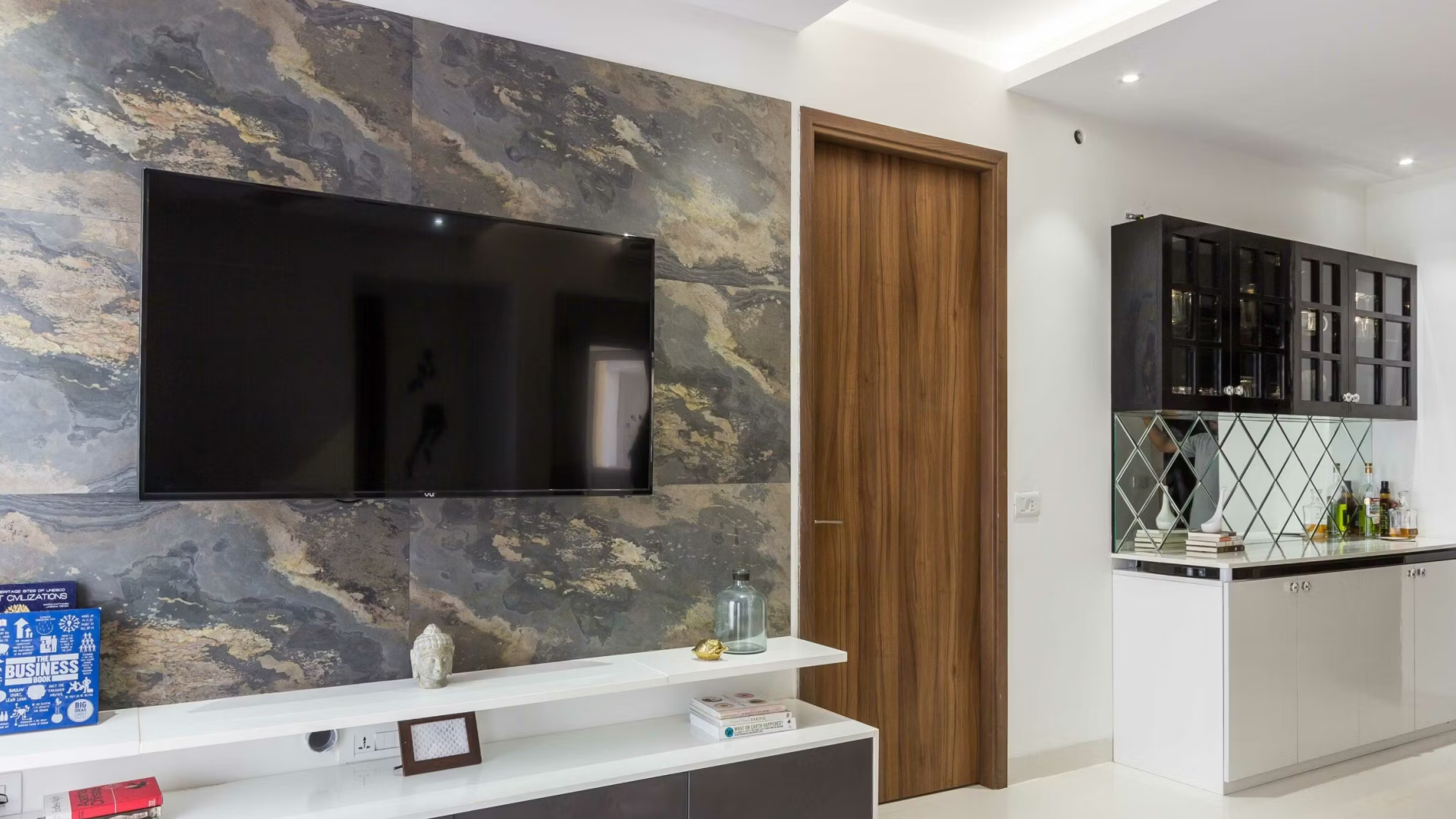
Stone walls can create an impressive entertainment backdrop, but they are often more complicated than brick.
Natural Stone Requires Careful Evaluation
Natural stone is rarely perfectly uniform. Its thickness, density, texture, and composition can vary considerably from one section to another.
Some stone surfaces are relatively dense and stable, while others can contain weak areas, seams, voids, or irregular sections. Drilling in the wrong location can damage the stone or create an unreliable mounting point.
Before installation, the surface should be inspected to identify suitable mounting locations.
What About Stacked Stone?
Stacked stone veneer deserves special attention.
A decorative stone surface does not necessarily provide the structural support required for a television. The installer needs to determine what is behind the veneer and establish whether the mounting hardware can reach a suitable structural substrate.
In other words, the stone you can see may not be the material actually carrying the TV's weight.
This is especially relevant for modern accent walls where thin stone veneer has been installed over another wall system.
Can a TV Be Mounted on Uneven Stone?
It can be possible, but the uneven surface creates additional challenges.
A TV mount needs to be properly secured and positioned. Significant variations in the stone surface can make it difficult for the mounting bracket to sit correctly against the wall.
The installation may require careful selection of mounting points and hardware, along with additional attention to leveling. A small error can become visually obvious once a large television is attached.
Mounting a TV on Tile
Tile is frequently found in kitchens, bathrooms, fireplaces, entertainment walls, and remodeled living spaces. A TV can be mounted over tile, but drilling must be done carefully to reduce the chance of cracking or chipping.
Can You Drill Through Tile to Mount a TV?
Yes, but the type of tile determines the drilling approach.
Ceramic and porcelain tile can generally be drilled with the appropriate equipment and technique. Harder tile materials may require specialized drill bits and slower, controlled drilling.
The goal is to create a clean opening without placing unnecessary pressure on the tile.
Once through the tile, the fastener must still be secured into an appropriate structural material behind it. The tile should not automatically be treated as the primary load-bearing surface.
What If the Tile Is Over Drywall?
If tile has been installed over drywall, the installer needs to identify the framing or another suitable structural support behind the wall.
The mounting strategy should account for both layers. Simply selecting an anchor based on the tile surface can produce an installation that looks secure but does not provide adequate support.
This is one reason wall assessment is important before purchasing or installing a TV mount.
What If the Tile Is Over Cement Board?
Tile may also be installed over cement board or another backer material. In that situation, the installer needs to determine how the backer is attached and where structural support is available.
The mounting hardware must be appropriate for the actual wall construction, not just the decorative tile layer.
Which TV Mount Works Best on Brick, Stone, or Tile?
There is no single TV mount that is automatically best for every masonry or tile wall.
The right choice depends on the television, wall construction, viewing position, and desired movement.
Fixed TV Mounts
A fixed mount holds the television close to the wall. This can create a clean appearance and works well when the viewing position is relatively straightforward.
On textured brick or stone, however, the depth of the surface may affect how close the TV can realistically sit.
Tilting TV Mounts
A tilting mount allows the screen to angle downward or upward. This can be useful when a television is mounted higher than normal, such as above a fireplace.
The available clearance behind the TV should be considered before installation.
Full-Motion TV Mounts
Full-motion mounts allow the television to extend from the wall and move from side to side.
They can be useful when viewers watch the TV from different seating positions. However, the mount can place greater leverage on its attachment points when extended, making proper structural anchoring particularly important.
For masonry or stone installations, hardware selection should account for this additional movement and load.
How Professionals Mount a TV on Brick, Stone, or Tile
A careful installation usually follows a predictable process.
Inspect the Wall
The installer first identifies the wall material and assesses its condition. For tile or stone, this includes determining what is behind the visible surface. For brick, the installer evaluates the masonry and selects suitable mounting locations.
Select the Mount
The mount should be compatible with the TV's size, weight, VESA mounting pattern, and intended viewing position. The wall material also influences the fastening strategy.
Mark the Mounting Location
The mounting position is measured before drilling. Height, viewing angle, furniture placement, power access, soundbar location, and cable routing can all influence the final position.
Drill Carefully
Different surfaces require different tools and drilling techniques. Tile needs controlled drilling to minimize cracking. Masonry requires equipment and bits designed for the material. Stone may require extra care because of its irregular composition.
Install the Correct Anchors
The fasteners need to connect the mounting bracket securely to an appropriate structural substrate. This is the stage where using the wrong anchor can turn an otherwise attractive installation into a safety problem.
Attach and Level the Mount
Once the bracket is securely installed, it is checked for alignment before the television is attached. Precise leveling is especially important with large screens because even a small angle can be noticeable.
Mount and Test the TV
The television is attached according to the mount manufacturer's instructions. The installer can then check stability, viewing angle, mount movement, cable connections, and access to connected devices.
Organize the Cables
Cable management can be completed after the TV is secured. Depending on the wall and installation requirements, cables may be routed through existing pathways, organized with suitable management systems, or professionally concealed where practical.
Common Mistakes to Avoid
A few installation shortcuts can create expensive problems later.
Drilling Without Identifying the Wall Structure: Knowing that a wall is made of brick, stone, or tile does not tell you what lies behind it. Before drilling, determine the construction and identify suitable attachment points.
Using Drywall Anchors on Masonry: Drywall anchors are designed for drywall applications. Masonry requires hardware intended for masonry. Using the wrong fastening system can compromise the installation.
Treating Tile as the Structural Support: Tile is a finish material in many installations. The fastener usually needs to engage the structural substrate behind it.
Ignoring the TV's Weight: Two televisions of the same screen size can have different weights and mounting requirements. Always check the manufacturer's specifications and make sure the mount is rated appropriately.
Forgetting Cable Connections: A TV should not be positioned solely according to aesthetics. Power outlets, HDMI connections, streaming devices, soundbars, network cables, and other equipment need to be considered before the final mounting location is selected.
Mounting Too High: A beautiful installation can still be uncomfortable if the TV is positioned excessively high. The ideal height depends on the room, seating arrangement, screen size, and viewing angle. Above-fireplace installations often require special consideration.
How to Protect Brick, Stone, and Tile During Installation
Protecting the wall is just as important as securing the television.
Use the correct drill bit for the material and avoid excessive force. Drilling too aggressively can create chips, cracks, or unnecessary surface damage.
For tile, controlled drilling is particularly important. The installer should avoid hammering through brittle tile unless the tool and technique are specifically appropriate for the application.
Stone also requires attention to natural variations. A visually solid area may not always be the best drilling location.
If the wall is expensive, decorative, or difficult to replace, professional installation can reduce the risk of unnecessary damage.
What About Cable Concealment on Masonry Walls?
Cable management is often more challenging on brick and stone than on conventional drywall.
A cable can sometimes be routed through an existing pathway, managed externally, or concealed using an appropriate installation method. The best approach depends on the wall construction and whether the homeowner wants permanent in-wall concealment.
Before creating any opening, the installer should consider electrical wiring, plumbing, structural components, and local installation requirements.
For network-connected televisions, planning should also include network wiring when required. This can be particularly useful for home theaters, offices, conference rooms, and commercial displays.
Can a Soundbar Be Mounted Under a TV on Brick, Stone, or Tile?
Yes. A soundbar can often be mounted beneath or near a wall-mounted television on these surfaces.
The soundbar bracket must be compatible with both the soundbar and the wall construction. Its position should also allow the soundbar to function as intended without interfering with the television.
Planning both installations together can produce a cleaner result. It also makes cable routing easier because the TV, soundbar installation, power connections, and source devices can be considered as one system rather than separate projects.
When Should You Hire a Professional TV Installer?
DIY TV mounting can be reasonable for straightforward installations, but specialized walls introduce additional variables.
Professional installation is worth considering when:
The TV is large or heavy.
The wall is made from natural stone.
The TV will be mounted above a fireplace.
The wall contains expensive or difficult-to-replace tile.
The stone surface is uneven.
You need concealed wiring.
The TV requires network wiring.
A soundbar will be installed at the same time.
The mount is full-motion.
You are unsure what is behind the wall.
The installation is in a commercial environment.
An experienced AV installer can evaluate the complete setup instead of treating TV mounting as a simple bracket installation.
For homeowners in Dallas–Fort Worth, professional TV wall mounting services can also include Smart TV setup, soundbar installation, TV relocation, cable management, network wiring, and TV removal or reinstallation when the project involves more than the physical mounting itself.
Brick, Stone, or Tile: Which Is Best for TV Mounting?
All three surfaces can work, but each presents different installation requirements.
Brick is often relatively straightforward when the masonry is solid and suitable anchors can be installed securely. Stone can provide an attractive backdrop but may require more careful evaluation because of its irregularity and composition.
Tile can produce a clean finished appearance, but drilling requires care to protect the surface. The structure underneath the tile is usually more important for load support than the tile itself.
The best surface is ultimately the one that can provide a secure attachment point while allowing the television to be positioned correctly and the cables to be routed safely.
Practical Checklist Before Mounting Your TV
Before drilling any holes, confirm the following:
Identify the wall material.
Determine what is behind the visible surface.
Check the TV's weight and VESA pattern.
Confirm the mount's weight rating.
Decide between fixed, tilting, or full-motion mounting.
Choose the ideal viewing height.
Locate power and cable connections.
Plan soundbar placement if applicable.
Determine how cables will be managed.
Check the condition of the brick, stone, or tile.
Select fasteners appropriate for the actual wall construction.
Verify the final position before drilling.
A few minutes of planning can prevent damaged tile, misplaced holes, awkward viewing angles, and difficult cable connections.
Conclusion
A TV can absolutely be mounted on brick, stone, or tile, but each surface requires the right installation strategy. Brick typically calls for masonry-specific anchors, stone requires careful assessment of the material and substrate, and tile needs controlled drilling with secure attachment to the structure behind it.
The most important factor is not simply the wall's appearance. A safe TV installation depends on the relationship between the television, selecting the right mount type, fasteners, wall construction, and cable system. If you ever need to compare these specialty surfaces to standard wall installations, you can also learn about mounting a TV on drywall.
For a clean result, plan the entire installation before drilling. Consider TV height, viewing angle, soundbar placement, power access, cable concealment, network connections, and the condition of the wall.
With proper preparation and the right hardware, even a challenging brick, stone, or tile surface can become a secure and attractive location for a modern home entertainment system. For more information about our services, visit our home page, explore our blog, or check our FAQ page.
Frequently Asked Questions
Can a TV be mounted directly onto a brick wall?
Yes. A TV can be mounted on solid brick using mounting hardware designed for masonry. The installer should assess the brick's condition, select suitable anchor points, confirm the mount's weight rating, and make sure the fasteners provide adequate structural support.
Can a TV be mounted on a stone fireplace?
Yes, but stone fireplace installations require additional planning. The installer should evaluate the stone, determine what is behind it, consider heat exposure, select appropriate mounting hardware, and ensure the TV is positioned at a comfortable viewing height.
Can you mount a TV on tile without cracking it?
It is possible to drill through tile without damaging it when the appropriate tools and technique are used. The drilling method depends on the tile type. The mounting hardware should also extend into an appropriate structural substrate behind the tile.
Is it better to mount a TV on brick or mortar?
For many masonry installations, solid brick can provide a stronger anchoring location than a mortar joint. However, the condition and construction of the wall should be evaluated before choosing mounting points. The correct anchor type also matters.
Can a heavy TV be mounted on a stone wall?
A heavy TV may be mounted on stone if the wall construction and attachment points can safely support the combined load of the television and mounting system. The stone type, substrate, anchor selection, and mount design should all be evaluated.
What type of TV mount is best for a brick wall?
There is no universal best mount for every brick wall. A fixed mount works well for simple viewing arrangements, while a tilting or full-motion mount may be preferable in other rooms. The mount must be rated for the TV and compatible with the masonry installation.
Can cables be hidden when mounting a TV on brick or stone?
Cable concealment may be possible, but the method depends on the wall construction. Existing pathways, cable-management systems, or professional wiring methods may be used. Any in-wall cable routing should account for electrical, structural, and safety considerations.
Can a soundbar be mounted under a TV on a tile wall?
Yes. A soundbar can often be installed beneath a wall-mounted TV on tile. The bracket needs to be appropriate for the soundbar and wall construction, while the mounting location should provide suitable clearance and allow the cables to be connected properly.
Is professional TV mounting worth it for a tile wall?
Professional installation can be particularly useful when the tile is expensive, difficult to replace, or installed over an unfamiliar wall structure. Proper drilling, anchor selection, leveling, and cable planning can help reduce installation problems.
Can a TV be mounted above a fireplace?
Yes, but the installation requires careful consideration of heat, viewing height, wall construction, cable routing, and the fireplace design. A TV mounted too high can also create an uncomfortable viewing angle, so the entire room layout should be considered before installation.