
Why Does Stud Finding Matter When Installing a Wall-Mounted TV?
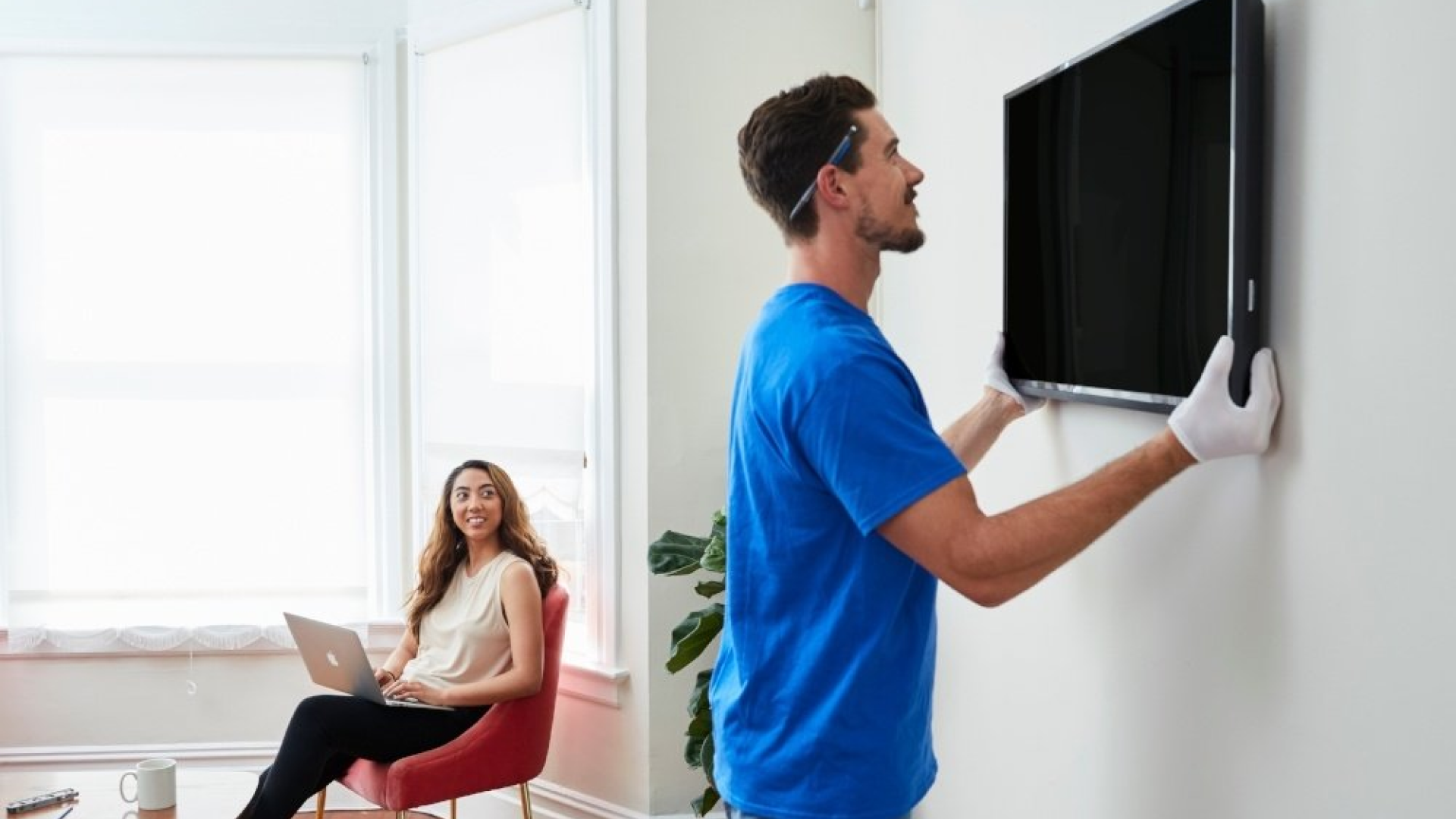
Mounting a TV on the wall can create a cleaner look, improve viewing comfort, and free up valuable floor space. But a secure TV installation depends on much more than choosing the right wall mount and drilling a few holes. One of the most important steps is identifying where the wall studs are located before the mount is attached.
Wall studs are the structural framing members behind drywall. They provide a much stronger attachment point than drywall alone, which is why professional TV installers carefully locate and evaluate studs before mounting a television.
This becomes especially important with larger or heavier TVs, full-motion mounts, and installations where the mount may experience additional leverage as the television is moved. A properly mounted TV should remain securely attached to the wall while allowing the mount to perform as designed.
For homeowners in Dallas–Fort Worth, understanding the role of studs can help you make better decisions about TV placement, wall mounts, cable management, and professional installation.
What Is a Wall Stud?
A wall stud is a vertical structural framing member located behind the visible wall surface. In many residential walls, studs are made from wood, although some buildings use metal framing.
Drywall is attached to the framing, but drywall itself is generally not intended to carry the full load of a wall-mounted television and its mounting hardware. The stud provides the solid material needed for properly selected fasteners to anchor the TV mount to the wall structure.
Why Are Studs Important for TV Mounting?
A TV mount transfers the weight of the television into the wall through its mounting hardware. When the hardware is properly attached to suitable framing, the load is supported by the structure behind the drywall.
Without adequate structural support, the fasteners may pull away from the wall, damage the drywall, or allow the television to become unstable.
That is why finding the studs is not simply a preliminary step. It is part of determining whether the planned mounting location can safely support the installation.
Are All Walls Built the Same Way?
No. Wall construction can vary between homes, apartments, offices, commercial buildings, remodels, and additions.
A wall may contain:
Wood studs
Metal studs
Masonry or concrete
Different stud spacing
Plumbing or electrical components behind the drywall
Reinforced areas designed for specific installations
The visible wall surface does not tell you everything about what is behind it. A professional installer evaluates the wall before deciding how and where to attach the mount.
Why Does Stud Finding Matter for a Wall-Mounted TV?
The main reason stud finding matters is simple: the TV mount needs a secure structural attachment point.
A television can place substantial load on its mounting hardware, and the type of mount can change how that load is distributed. A low-profile fixed mount sits relatively close to the wall, while a full-motion mount extends outward and can introduce additional leverage when the TV is pulled away or repositioned.
Studs Provide Structural Support
Attaching a TV mount directly to an appropriate wall stud generally provides a stronger structural connection than relying on drywall alone.
The exact fastening method depends on the wall construction, mount design, television weight, and manufacturer requirements. A qualified installer should match the hardware and installation method to those conditions rather than assuming every wall requires the same approach.
Full-Motion Mounts Make Wall Structure Even More Important
Full-motion TV mounts allow the screen to tilt, swivel, or extend away from the wall.
That flexibility is convenient, but it also means the mounting system can experience forces that are different from those of a fixed mount. Extending a television outward increases the distance between the load and the wall, creating additional leverage on the mounting points.
For this reason, careful stud identification and proper hardware selection are particularly important when installing an articulating or full-motion TV mount. You can read more about options in this guide to fixed vs tilting vs full-motion TV mounts.
Large TVs Require Careful Planning
A large-screen television may be heavier and physically larger than a smaller display. The installation also needs to account for the dimensions of the mounting bracket and the manufacturer's mounting requirements.
Before drilling, an installer should confirm:
The television's weight.
The mount's rated capacity.
The wall construction.
The location and spacing of suitable studs.
The correct mounting hardware.
The desired viewing height and position.
The location of electrical outlets and cables.
This planning helps prevent a situation where the perfect-looking TV position turns out to be a poor mounting location.
How Do You Find Studs Behind a Wall?
There are several ways to locate studs, but finding one is only part of the job. The installer also needs to determine whether the identified framing is suitable for the planned TV mount.
Use a Stud Finder
A stud finder is one of the most common tools used to locate framing behind drywall.
Depending on the model, a stud finder may detect changes in density or identify other characteristics associated with framing. Some advanced tools can provide additional information about objects behind the wall.
However, a stud finder should not be treated as an infallible device. Different wall materials, thicknesses, finishes, and objects behind the drywall can affect readings.
Confirm the Location
Professional installers often verify stud locations rather than relying on a single reading.
The goal is to establish a reliable mounting position before making permanent holes. This is especially useful when the desired TV location does not line up neatly with the apparent center of a stud.
Check the Mounting Pattern
Finding a stud does not automatically mean every TV mount can be installed exactly where you want it.
The mount's mounting holes and the television's VESA mounting pattern also affect positioning. The installer needs to consider how the bracket aligns with the available structural support.
A good installation balances the TV's position, the mount's design, stud placement, viewing height, and cable access.
What Happens If You Mount a TV Without Finding the Studs?
One common mistake is assuming that drywall anchors are always sufficient for a wall-mounted television. For more insights on this, check out our article on can a tv be mounted on drywall without damaging the wall.
Some anchors are designed for specific loads and applications, but the suitability of any anchor depends on the wall material, anchor type, installation method, and actual load. A TV mount should never be installed using a generic anchor simply because it fits into a drywall hole.
Potential Problems With Poor Wall Support
Improper support can lead to:
Loose mounting hardware
Cracked or damaged drywall
A tilted or unstable television
Movement of the TV mount
Damage to the wall
In severe cases, the television falling from the wall
A falling television can damage the screen, furniture, flooring, or nearby objects. It can also create a safety hazard for people and pets.
The goal is not simply to get the television onto the wall. The goal is to create a secure installation that remains stable during normal use.
Can You Mount a TV Between Studs?
Sometimes the preferred viewing position does not line up directly with the available studs.
That does not automatically mean the installation is impossible. Depending on the wall construction and mount, an installer may have several options, but the correct solution depends on the specific installation.
Why Stud Spacing Matters
Studs are commonly installed at regular intervals, but existing construction should always be verified rather than assumed.
The mounting bracket may have several attachment points designed to accommodate different stud locations. If the bracket can safely span the appropriate studs while meeting manufacturer requirements, the TV may be positioned independently of the exact center of a single stud.
In other situations, additional structural reinforcement or a different mounting approach may be necessary.
What About a Wall That Has No Convenient Stud Location?
A professional installer can evaluate alternatives based on the wall type.
For masonry walls, for example, the mounting approach is different from a standard drywall-over-wood-framing installation. Concrete, brick, and other solid surfaces require appropriate masonry fasteners and installation methods.
The important point is that the solution should be based on the actual wall, not a one-size-fits-all mounting technique.
Does the Type of TV Mount Affect Stud Requirements?
Yes. The mount style affects how the television's weight and movement are transferred to the wall.
Fixed TV Mounts
A fixed mount keeps the TV close to the wall and generally has limited movement.
Because the television remains relatively close to the wall, the installation does not experience the same extension-related leverage associated with a full-motion bracket. Structural attachment is still essential, however.
Tilting TV Mounts
A tilting mount allows the screen to angle vertically.
This can be useful when the TV is mounted higher than eye level or when reducing glare is a priority. The mount still needs to be securely attached to appropriate wall structure.
Full-Motion TV Mounts
Full-motion mounts can extend, swivel, and tilt the television.
The additional movement makes proper installation particularly important. The installer should account for the mount's maximum extension, the TV's weight, and the wall's structural characteristics.
What Should You Check Before Drilling Into a Wall?
Stud location is only one part of safe TV installation. You can review additional pointers in our post on what should you check before mounting a tv on a wall.
Before drilling, the installer should also consider what may be hidden behind the wall surface.
Electrical Wiring and Plumbing
Electrical wiring, plumbing, and other building components may run through wall cavities.
A stud finder may help with framing detection, but it does not eliminate the need for caution before drilling. The exact location and depth of hidden components cannot always be determined from the wall surface.
If the installation requires drilling into a location where utilities may be present, appropriate precautions should be taken.
Outlet and Cable Locations
The position of electrical outlets, HDMI cables, Ethernet connections, and other connections can affect the final installation.
Planning these details before mounting the TV can produce a much cleaner result. It can also reduce the temptation to route cables awkwardly after the television is already installed.
This is where TV mounting and cable management should be planned together rather than treated as two completely separate jobs.
How Does Stud Finding Improve Cable Management?
Stud identification is primarily about structural support, but it can also influence the overall installation plan.
A wall-mounted television often looks best when cables are organized and concealed as much as practical. The location of studs, outlets, and cable pathways can affect how cables are routed.
Plan Cable Routing Before Mounting
Before the bracket is permanently installed, consider:
Where the power outlet is located
Where HDMI and other source cables need to connect
Whether an Ethernet connection is required
Where a soundbar installation will take place
Whether external devices will be placed below the TV
How visible the cables will be after installation
Planning first helps avoid unnecessary holes and makes the finished setup cleaner.
Common Misconceptions About Studs and TV Mounting
There are several assumptions that can lead to installation problems.
“The Drywall Can Hold the TV”
Drywall is not the same as structural framing. While certain drywall anchors can support specific loads in appropriate applications, a TV mounting system must be evaluated as a complete installation.
The weight of the television, type of mount, wall material, fasteners, and mounting pattern all matter.
“Any Stud Finder Will Give a Perfect Reading”
Stud finders are useful tools, but readings should be interpreted carefully.
Wall construction, thickness, finishes, and hidden materials can influence detection. Confirming the framing location before drilling is a prudent installation practice.
“A Bigger TV Just Needs Bigger Screws”
Larger fasteners do not automatically make an installation safe.
The fastener must be appropriate for the wall construction and mounting application. Using an oversized or incorrect fastener can create its own problems.
“The TV Mount Will Cover Any Mistakes”
The bracket may hide the holes after installation, but it cannot correct an unsuitable structural attachment.
A clean-looking installation still needs proper support behind the wall.
A Practical TV Mounting Checklist
Before mounting a TV, use this basic checklist:
Identify the wall construction. Determine whether you are working with drywall over wood framing, metal framing, masonry, or another surface.
Locate suitable structural support. Identify and verify the relevant studs or solid mounting surface.
Check the TV specifications. Confirm weight and VESA mounting information.
Check the mount specifications. Make sure the bracket is appropriate for the television and intended installation.
Plan the viewing position. Consider height, seating distance, glare, and room layout. (Read more on viewing height via our guide on how high should a tv be mounted).
Check for hidden utilities. Think about electrical wiring, plumbing, and other components before drilling.
Plan cables. Consider power, HDMI, network wiring, soundbar connections, and other devices.
Install with appropriate hardware. Follow the mount manufacturer's requirements for the wall type and installation.
Verify stability. Confirm that the bracket and television are properly secured before completing the setup.
Finish the installation cleanly. Organize cables and make sure the TV is aligned as intended.
When Should You Consider Professional TV Installation?
DIY TV mounting may appear straightforward, but the installation involves more than attaching a bracket to a wall.
Professional installation can be useful when the TV is large, the wall construction is unfamiliar, the desired position does not align with convenient framing, or the setup includes additional equipment such as a soundbar, network connection, or concealed cables.
An experienced installer can evaluate the wall, select an appropriate mounting approach, position the television accurately, and coordinate related components.
For homeowners and businesses in the Dallas–Fort Worth area, professional TV mounting can also be helpful when a clean finished appearance matters as much as the physical installation. You can learn more about us or check our detailed FAQ page for further details. If you ever need equipment moved or uninstalled, we also provide tv reinstallation relocation and tv removal services.
Situations That May Require Extra Planning
Consider professional assistance if you are dealing with:
A large or unusually heavy television
A full-motion mounting bracket
Brick, stone, or concrete walls (learn more about mounting on brick, stone, or tile)
Uncertain wall construction
A TV that must be centered in a specific location
A fireplace installation
Hidden or concealed cable routing
A soundbar installation
Network wiring
TV relocation or reinstallation
Conclusion
Finding the studs is one of the most important parts of installing a wall-mounted TV because the wall structure determines how securely the mounting system can be attached.
A proper installation considers much more than the television itself. The wall construction, stud placement, mount type, TV weight, VESA pattern, fasteners, cable routing, viewing position, and hidden utilities all need to work together.
A fixed TV mount, tilting bracket, and full-motion mount can place different demands on the wall. Large televisions and articulating mounts deserve especially careful planning because their size, weight, and movement can affect the mounting system.
If you are unsure about the wall construction or cannot confidently identify a suitable mounting location, professional TV installation can remove much of the guesswork. A careful installation starts behind the drywall, where the structural support matters most, and ends with a TV that is securely mounted, properly aligned, and neatly connected. For more expert tips, visit our main blog.
Frequently Asked Questions
How do I know where the studs are before mounting a TV?
A stud finder can help locate framing behind drywall, but readings should be verified before drilling. The installer should also consider stud spacing, wall construction, the TV mount's mounting holes, and potential wiring or plumbing behind the wall.
Can a TV be mounted without hitting a stud?
It depends on the wall construction and mounting system. Some specialized mounting methods can work with certain wall materials or reinforced structures, but you should not assume ordinary drywall alone can safely support a TV mount. The appropriate solution depends on the specific installation.
How far apart are studs for TV mounting?
Stud spacing varies by construction, so it should be measured rather than assumed. Many residential walls use regular framing patterns, but remodeling, additions, and different construction methods can change the spacing. The TV bracket must also accommodate the available mounting points.
Is a stud finder enough to safely mount a TV?
A stud finder is a useful tool, but it is only one part of the process. Safe TV mounting also requires evaluating wall construction, selecting suitable hardware, checking the TV and mount specifications, considering hidden utilities, and confirming that the final mounting position is structurally appropriate.
Can I mount a TV between two studs?
In some installations, yes. The mounting bracket may be designed to attach across multiple studs, allowing the television to be positioned between them. Whether this is appropriate depends on the bracket design, stud placement, wall construction, and manufacturer's installation requirements.
Does the type of TV mount change how important stud finding is?
The basic need for secure structural support remains important for all TV mounts. Full-motion mounts deserve particular attention because extending and moving the television can create additional leverage on the mounting points compared with a low-profile fixed mount.
Can you mount a TV on a brick or concrete wall?
TVs can be mounted on suitable masonry surfaces using installation methods and fasteners designed for that material. Brick, concrete, stone, and other masonry surfaces require a different approach from drywall over wood framing, so the wall should be evaluated before drilling.
What should I check before drilling into a wall for TV mounting?
Check the wall construction, framing, electrical wiring, plumbing, outlet locations, cable connections, and the position of the TV mount. Avoid assuming that an empty-looking section of wall is free from hidden building components.
Does cable management depend on where the studs are?
Stud placement can affect cable routing and the final location of the television, outlets, and other equipment. Planning cable management before installing the bracket can help create a cleaner setup and reduce unnecessary drilling or exposed cables.
Is professional TV mounting worth it for a large TV?
Professional installation can be useful for large televisions, full-motion mounts, unusual wall surfaces, difficult mounting positions, and installations involving soundbars, cable concealment, or network wiring. The installer can evaluate the wall and coordinate the entire setup rather than treating the bracket as an isolated component.