
Introduction
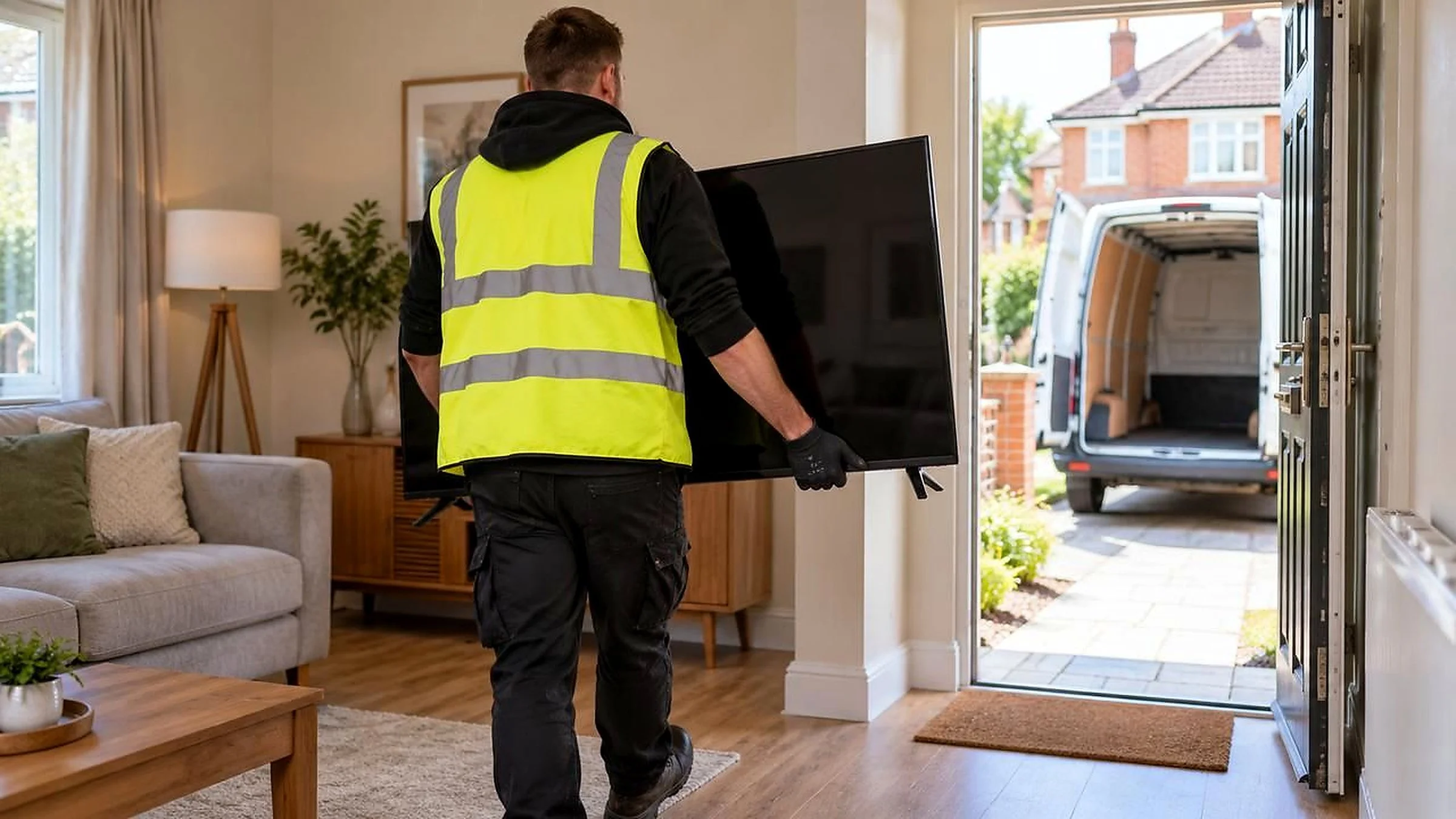
Removing an old television may seem like a simple task, especially if it is already mounted on the wall. However, taking down a wall-mounted TV involves more than lifting the screen off its bracket. The installer must account for the television's weight, mounting hardware, electrical connections, cable routing, wall condition, and the safest way to handle the equipment after removal.
Professional TV removal helps prevent avoidable damage to the screen, wall, furniture, and surrounding electronics. It also makes it easier to determine what should happen to the television afterward, whether you plan to reuse it in another room, donate it, recycle it, or arrange an appropriate disposal option.
The process can vary depending on the TV's size, the mounting system, the wall material, and the condition of the existing installation. A television attached to a standard drywall-mounted bracket may require a different approach from one installed above a fireplace or on a brick surface with concealed wiring.
Understanding what happens during professional TV removal and disposal helps homeowners and business owners prepare for the appointment, protect their property, and make informed decisions about old electronics. From the initial inspection to the final wall check, each stage serves a practical purpose.
What Is Professional TV Removal?
Professional TV removal is the process of safely detaching a television from its wall mount or stand, disconnecting its accessible connections, and handling the equipment according to the owner's plans. The service may also include removing the mounting bracket, organizing cables, and preparing the TV for transportation, reuse, donation, or recycling.
The exact scope depends on the service requested. Removing the television from its bracket does not automatically mean that the bracket, wall hardware, concealed cables, or television itself will also be removed or disposed of.
Before work begins, the installer should clarify what needs to come down and what should remain in place.
Why Does Professional TV Removal Matter?
Modern televisions can have large screens, narrow bezels, and delicate display panels. Even a relatively lightweight television can be damaged if someone grips the wrong area, twists the frame, or places pressure on the screen while lifting it.
A professional approach helps reduce several common risks:
Cracked screens caused by uneven pressure or accidental impacts.
Scratched walls and damaged drywall around mounting hardware.
Injuries from lifting a large television without adequate assistance.
Damaged HDMI ports, power connections, or cable ends.
Loose wall anchors or mounting hardware left behind.
Improper handling of electronic waste.
Professional removal is particularly useful for large-screen TVs, heavy older models, installations above fireplaces, commercial displays, and televisions with concealed cables.
Step 1: Inspecting the Television and Existing Installation
The first stage is an assessment of the television, mounting bracket, wall, and surrounding area. This allows the installer to determine how the equipment is secured and identify any complications before attempting to remove it.
Checking the TV Mount and Wall Surface
Different mounting systems require different removal methods. A fixed mount generally holds the television close to the wall, while a tilting mount allows the screen to angle downward. A full-motion mount uses articulating arms that extend and rotate.
The installer checks how the television attaches to the bracket and identifies any locking screws, safety tabs, release cords, or other retaining mechanisms. These components must be released correctly before the screen can be lifted away.
The wall surface also matters. Drywall, wood studs, brick, concrete, and stone have different fastening characteristics. An installer may need to inspect the visible mounting points and surrounding surface to understand how the bracket is secured.
Identifying Potential Hazards
The inspection may reveal loose hardware, an unstable bracket, damaged drywall, exposed wiring, or a mount that has shifted over time.
If the television is unusually heavy, mounted at a difficult height, or positioned in a tight space, the installer can determine whether additional assistance or specialized equipment is needed.
This assessment also helps establish whether the existing bracket can remain installed for another television or should be removed as part of the service.
Step 2: Preparing the Work Area
Before lifting the television, the installer prepares the surrounding area to reduce the risk of accidental damage.
Furniture, decorative objects, and other obstacles may need to be moved away from the wall. A clear working area provides room to position the television safely and maneuver it without striking nearby objects.
Protecting Floors, Furniture, and Nearby Equipment
A protective covering may be placed on the floor or on a suitable work surface. If the television will be set down temporarily, the installer needs a stable, clean location that will not place pressure on the screen.
Soundbars, streaming devices, gaming consoles, and connected accessories may also need to be disconnected or moved before removal.
For a home entertainment system with several components, organizing the equipment first helps prevent cables from becoming tangled or pulled unexpectedly.
Preparing for a Safe Lift
Large TVs should not be handled casually. Depending on the screen size, weight, mounting height, and room layout, two people may be needed to support and remove the unit safely.
The installer identifies suitable gripping points and plans the movement from the wall to the designated resting place. The screen should not be lifted by its display panel or handled in a way that places excessive pressure on the frame.
Step 3: Disconnecting Power and Cables
Once the area is prepared, the next step is disconnecting the television from its power source and connected equipment.
The TV should be switched off and unplugged before physical removal. If electrical work is required beyond disconnecting an ordinary accessible plug, a qualified professional should handle that work.
Disconnecting HDMI, Ethernet, and Other Connections
Depending on the setup, the television may have connections for:
HDMI cables connected to streaming devices, gaming consoles, or receivers.
Ethernet cables used for a wired network wiring connection.
Optical audio cables connected to a sound system.
Coaxial cables connected to an antenna or cable television service.
USB cables connected to storage devices or accessories.
External power supplies or other manufacturer-specific connections.
The installer identifies and disconnects the accessible cables without pulling them forcefully from their ports.
If the television is being moved to another room, labeling the connections can make the later reinstallation easier. It can also help preserve the original arrangement of the home entertainment system.
What If the Wires Are Hidden Inside the Wall?
Some installations use in-wall cable routing to create a cleaner appearance. In these cases, the installer needs to determine how the cables enter and exit the wall and whether any connections can be accessed safely.
Removing a television does not automatically require removing concealed cables. If the wiring is in good condition and will be reused, leaving it in place may be the most practical option.
However, abandoned cables, damaged wiring, and electrical connections inside walls require appropriate handling. Ordinary low-voltage AV cables and household electrical wiring are not interchangeable, and any necessary electrical work should be performed by a qualified electrician.
Step 4: Detaching the Television From the Wall Mount
This is the central part of professional TV removal. The installer releases the television from its mounting system while keeping the screen properly supported.
Releasing the Mounting Mechanism
Most wall-mounted televisions are attached to a bracket using mounting rails, hooks, or another manufacturer-specific system. Many installations include safety screws, locking bars, or release mechanisms that prevent the TV from accidentally lifting off the mount.
The installer identifies these features and releases them in the correct order.
On some models, the television must be lifted slightly before it can be pulled away from the wall. Other designs require access to screws near the bottom of the bracket or release tabs behind the screen.
For a full-motion mount, the articulating arm may need to be positioned carefully to provide access to the attachment points.
Lifting and Handling the Screen
Once the retaining mechanism has been released, the television is lifted away from the bracket with controlled movements.
The installer keeps the screen supported and avoids twisting the frame or placing unnecessary pressure on the display. The television is then moved to a safe resting position.
A common misconception is that removing a TV is simply the reverse of installing one. In practice, the removal process must account for the existing mount, the available lifting space, cable placement, and the possibility that the hardware has become difficult to access.
What Happens If the TV Is Stuck?
A television that does not release easily should not be forced away from the wall. The cause may be a locking screw, a safety latch, an incorrectly installed bracket, or a mounting system that requires a specific release sequence.
Forcing the screen can damage the television, mounting hardware, or wall. A careful inspection is preferable to pulling harder.
Step 5: Removing the Wall Bracket and Hardware
After the television has been removed, the installer can assess the remaining mounting hardware.
Some customers want the bracket to stay in place because they plan to install another compatible television. Others want the entire installation removed to prepare the wall for painting, furniture rearrangement, or a different room layout.
When Should the Mount Be Removed?
Leaving the bracket installed can be practical when it is structurally sound, properly secured, and compatible with the next television. Compatibility depends on the mount's weight rating, supported screen dimensions, mounting pattern, and the new TV's requirements.
If the bracket is damaged, loose, outdated, or positioned incorrectly for the new screen, removal and replacement may be appropriate.
When removing a bracket, the installer takes out the relevant fasteners and handles the hardware carefully. Wall anchors and screws may be retained for appropriate reuse or collected for disposal, depending on their condition and the customer's preferences.
What About Wall Damage?
Removing a wall mount can reveal small holes, paint marks, compressed drywall, or larger damaged areas. The extent of the damage depends on the original installation, the fasteners used, the wall material, and how long the bracket has been in place.
Professional TV removal does not automatically include drywall repair, patching, sanding, or painting. These tasks should be discussed separately if a finished wall is required.
For brick or concrete walls, the removal of masonry fasteners may leave visible holes that require a different repair approach from drywall.
Step 6: Inspecting the Wall and Organizing the Equipment
Once the television and any requested hardware have been removed, the installer can check the exposed area.
This final inspection helps identify visible damage, loose fasteners, cable-routing issues, and anything that may need attention before the wall is used again.
Checking the Condition of the Wall
The installer can point out visible cracks, damaged mounting holes, or areas where the wall surface has pulled away around the fasteners. If a future TV wall mounting is planned, these observations can help determine whether the mounting location needs repair or reinforcement.
A wall that previously supported a television should not automatically be assumed suitable for another installation. The condition of the existing mounting points and the requirements of the new setup should be assessed before reusing them.
Keeping Accessories and Cables Together
If the television will be reused, the power cable, remote control, detachable stand, mounting rails, and other accessories should be kept together where practical.
For a business relocating several displays, labeling each television and its corresponding cables can help reduce confusion during the next installation.
An organized handoff is especially useful when equipment is being transferred between conference rooms, offices, rental properties, or different areas of a home.
What Happens to the TV After Removal?
Removing a television and disposing of it are separate tasks. After the screen has been detached, the owner must decide whether to keep it, relocate it, donate it, recycle it, or arrange another appropriate disposal method.
The right option depends on the television's condition, age, functionality, and local disposal requirements.
Option 1: Reinstall the Television Somewhere Else
A television that still works may be suitable for another room, such as a bedroom, guest room, office, or entertainment area.
Before relocating it, check the available wall space, viewing distance, power access, and cable connections. The new mounting location should also provide appropriate support for the television's weight.
TV relocation and reinstallation may involve selecting a compatible mount, securing it to suitable structural support, reconnecting devices, and configuring the display and network connection.
If the television is being transported, protect the screen from pressure and impact. Use the original packaging when available, or suitable protective packaging designed for the equipment.
Option 2: Donate a Working Television
A functioning television may be useful to a community organization, school, nonprofit, or individual who needs one. However, donation policies vary, and some organizations accept only equipment that works reliably and includes necessary accessories.
Before donating, confirm that the recipient accepts the particular type of television. Clean the exterior, gather the remote and power cable if available, and disclose any known defects.
If the television has built-in streaming applications or other smart features, sign out of personal accounts and perform a factory reset according to the manufacturer's instructions. Remove any personal data stored on connected devices or external storage.
Option 3: Recycle the Television
Electronic recycling is often an appropriate choice for televisions that no longer work or are not suitable for reuse.
Televisions contain electronic components and materials that should not automatically be treated like ordinary household trash. Depending on the model, they may contain plastics, metals, circuit boards, and other materials that require specialized handling.
Look for an electronics recycling program, an authorized local collection facility, or a retailer that accepts eligible televisions. Confirm the accepted TV types, fees, collection arrangements, and any preparation requirements before dropping off the equipment.
Older televisions, including some bulky CRT models, may have different handling requirements from modern flat-screen displays.
Option 4: Arrange an Appropriate Disposal Service
Some removal providers offer hauling or disposal assistance, while others focus only on detaching the television from the wall.
Before scheduling, ask whether the quoted service includes transportation, recycling drop-off, donation delivery, or disposal fees. A TV removal appointment should not be assumed to include every stage of electronic waste management.
Local rules can also affect which facilities accept televisions and how they must be delivered. Following the requirements of the receiving facility helps ensure the equipment reaches an appropriate destination.
How Much Does Professional TV Removal and Disposal Cost?
The cost of professional TV removal and disposal depends on the work involved. A straightforward removal from an accessible wall mount is generally less complicated than removing a large display above a fireplace, dismantling a full-motion mounting system, or managing several commercial televisions.
Factors that can affect the price include:
TV size and weight: Large or heavy screens may require additional labor.
Mounting system: Fixed, tilting, and articulating mounts can involve different removal steps.
Installation height: A television mounted above a fireplace or in a high commercial space may require additional equipment or assistance.
Wall material: Brick, concrete, stone, and drywall installations can involve different hardware and removal requirements.
Cable concealment: Accessible external cables are usually simpler to handle than complex concealed wiring.
Bracket removal: Taking down the mount is a separate task if it is not included in the service.
Disposal or transportation: Hauling, recycling fees, and donation delivery may add to the total.
Wall repair: Patching, refinishing, and painting may require separate services.
For an accurate estimate, provide the television's approximate size, its mounting location, the type of wall if known, and whether you want the bracket removed. Include photos of the installation when possible.
Ask for a clear explanation of what the quote covers so that removal, transportation, recycling, and wall repair are not mistakenly treated as one service.
How to Prepare for a Professional TV Removal Appointment
A little preparation can make the appointment easier and help protect your equipment.
Before the Installer Arrives
Decide what should be removed. Confirm whether you want only the television taken down or the bracket and exposed cables removed as well.
Choose what happens next. Decide whether the TV will be stored, relocated, donated, recycled, or taken away through an agreed service.
Clear the area. Move furniture and fragile objects away from the television where practical.
Save important settings. If you plan to reuse the TV, record any settings or connection details you may need later.
Gather accessories. Keep the remote, power cable, stand, and relevant mounting hardware together if they will be reused.
Mention unusual conditions. Tell the provider about high ceilings, fireplace installations, concealed wiring, damaged brackets, or difficult access.
You do not need to dismantle the wall mount yourself before the appointment. In fact, attempting to loosen the bracket without understanding its locking mechanism can create unnecessary risk.
Common Misconceptions About TV Removal and Disposal
Removing the TV Always Includes Removing the Bracket
Not necessarily. Some services remove only the screen, leaving the bracket attached to the wall. Confirm whether bracket removal is included in the appointment.
Every Old Television Belongs in the Trash
Televisions may be accepted through dedicated electronics recycling programs, and functioning units may be suitable for donation or reuse. Check local requirements and the receiving facility's policies before disposal.
The Wall Will Look Perfect After Removal
Mounting hardware can leave holes, paint differences, or damaged drywall. Cosmetic repair is often a separate task and should be arranged if the wall needs to be ready for painting or immediate reuse.
A Removed TV Can Be Installed Anywhere
A different room may have a different wall structure, power access, viewing arrangement, and mounting requirements. The new location needs to be assessed before the television is reinstalled.
Concealed Cables Must Always Be Removed
Cables that remain safe and suitable for future use may be left in place. Damaged or abandoned wiring should be evaluated appropriately, especially when electrical wiring is involved.
Conclusion
Professional TV removal and disposal involve several steps beyond taking a television off the wall. The process begins with an inspection of the screen, bracket, wall, and connections, followed by work-area preparation, safe disconnection, controlled removal, and a final check of the mounting area.
After removal, the television can be relocated, donated, recycled, or handled through an appropriate disposal service. The best option depends on the equipment's condition and the available local programs. It is also worth confirming whether bracket removal, cable handling, transportation, and wall repair are included in the service.
For homeowners and businesses in Dallas–Fort Worth, professional TV removal can help protect valuable equipment and reduce the risks associated with heavy screens and difficult mounting locations. TV Mounting Dallas provides TV mounting and home entertainment installation services backed by more than 20 years of AV experience. If you are preparing to replace a television, move an existing setup, or clear an outdated installation, discussing the scope of the work in advance can help you plan the next step with confidence.
Frequently Asked Questions
1. How long does professional TV removal take?
A straightforward removal may take around 15–30 minutes, although the actual time varies with screen size, mounting height, bracket design, cable concealment, and access. Removing the bracket, handling multiple TVs, or arranging transportation can extend the appointment.
2. Can a wall-mounted TV be removed without damaging the wall?
Careful removal can reduce the risk of wall damage, but it cannot guarantee a mark-free surface. Existing mounting holes, paint differences, damaged drywall, and fastener marks may remain after the television and bracket are removed.
3. Does professional TV removal include taking down the wall mount?
Not always. Some services remove only the television, while others offer bracket and hardware removal as an additional task. Confirm the service scope before booking, particularly if you need the wall cleared for painting or another installation.
4. What should I do with an old television after removing it?
If the television works, consider reusing it or donating it to an organization that accepts suitable electronics. If it is broken or outdated, look for an electronics recycling facility or an approved collection program that accepts your TV type.
5. Can a removed television be mounted in another room?
Yes, provided the television remains in good condition and the new location supports a safe installation. The installer should check the wall structure, mount compatibility, viewing position, power access, and cable requirements before reinstalling the screen.
6. Is professional TV removal necessary for a large television?
Professional assistance is worth considering for large, heavy, high-mounted, or difficult-to-access televisions. These installations can require coordinated lifting and careful release of the mounting hardware to reduce the risk of injury or equipment damage.
7. Are cables removed when a TV is taken down?
Accessible cables can be disconnected during removal, but concealed cables are not necessarily extracted from the wall. The installer should confirm whether you want cables retained for reuse or removed as part of a separate, appropriate wiring service.
8. Can I recycle a broken flat-screen TV?
Many electronics recycling programs accept eligible flat-screen televisions, but acceptance policies vary by location and facility. Check whether the program accepts your TV technology and size, and ask about collection requirements or fees before transporting the equipment.
9. Does TV disposal cost extra after removal?
It may. Detaching the television, transporting it, delivering it to a recycling facility, and paying any applicable processing fees are different services. Ask for an itemized estimate that identifies which removal and disposal tasks are included.
10. Should I reset a Smart TV before donating or disposing of it?
Yes, if the television will leave your possession, perform a factory reset according to the manufacturer's instructions when possible. Sign out of streaming applications and remove personal accounts or stored information to reduce the risk of exposing your private data.
