
Introduction
Removing a television from a wall may seem like a straightforward task. After all, once the screen is disconnected, it might appear that all you need to do is lift it off the bracket. In reality, safe TV removal can involve much more than taking down a screen. The television may be heavy, the mounting hardware may be difficult to access, and the installation may include concealed wiring, wall anchors, or a soundbar installation connected to the same setup.
Professional TV removal makes sense when a television is large, mounted in a difficult location, attached to a delicate wall surface, or part of a more complicated home entertainment system. It can also be a practical choice when moving to a new home, renovating a room, replacing an older television, or preparing a commercial space for a new layout.
For homeowners and businesses throughout Dallas–Fort Worth, knowing when to call an experienced AV technician can help prevent avoidable damage to the television, mounting hardware, surrounding walls, and connected equipment.
TV Mounting Dallas provides tv wall mounting dallas, tv removal dallas, tv reinstallation relocation dallas, soundbar installation dallas, cable management dallas, tv setup installation dallas, and related audiovisual services. With more than 20 years of AV experience, the company understands that removing an existing installation requires the same attention to safety and detail as mounting a new television.
What Is Professional TV Removal?
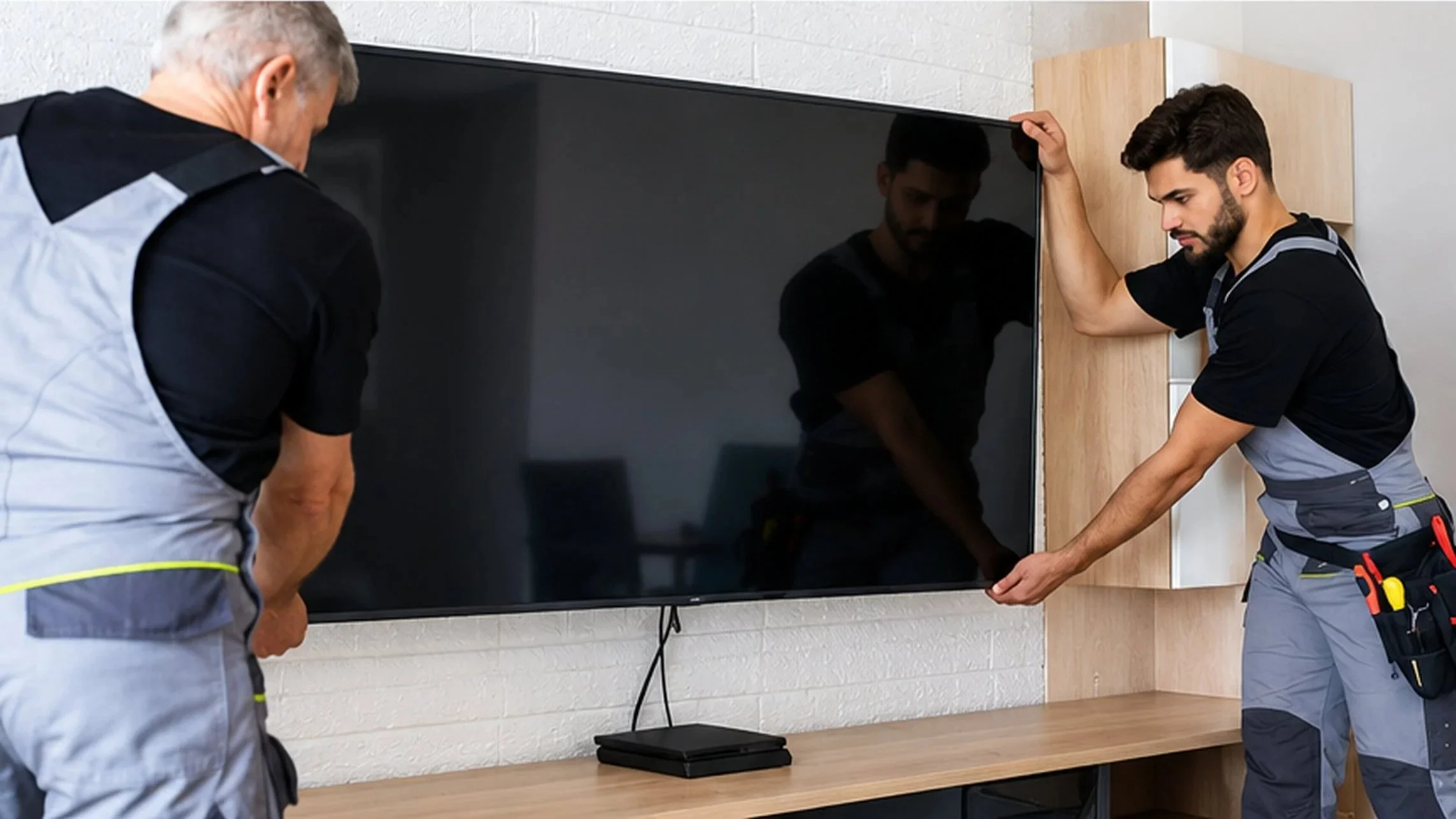
Professional TV removal is the process of safely disconnecting and taking a television off its wall mount, ceiling mount, or other mounting system while protecting the equipment and surrounding surfaces. Depending on the installation, the work may also involve removing the mounting bracket, disconnecting accessories, organizing cables, and preparing the wall for repairs or a new installation.
The scope of the job depends on what the customer wants removed. Some people only need the television taken down, while others want the entire mounting system and associated wiring removed.
What Does a TV Removal Service Typically Include?
A professional removal appointment may involve several steps:
Inspecting the television, mounting bracket, wall surface, and surrounding space.
Identifying connected devices, power cables, HDMI connections, and other wiring.
Disconnecting equipment carefully before handling the screen.
Releasing the television from the mounting mechanism using the appropriate procedure.
Removing the bracket and hardware when requested.
Checking the wall for exposed anchors, holes, or installation-related damage.
Preparing the area for a replacement television, relocation, or wall repair.
Not every appointment requires all these services. For example, someone replacing a television might want to keep the existing bracket if it is compatible with the new model and remains securely attached. You can learn more about this process in our guide on can a mounted tv be removed and reinstalled in another location.
TV Removal vs. TV Relocation
TV removal and TV relocation are related services, but they serve different purposes.
TV removal focuses on taking down the existing television. TV relocation involves removing it from one location and installing it somewhere else. Relocation may require a compatible mounting bracket, a new wall assessment, cable adjustments, and additional installation work.
If you are moving to another home or rearranging a room, it is worth discussing both tasks together. Planning the removal and reinstallation as one project can help avoid unnecessary handling and make it easier to determine what hardware and accessories you need.
When Does Professional TV Removal Make Sense?
There is no single television size or mounting style that automatically requires professional removal. The decision depends on the weight of the equipment, the installation conditions, the person's experience, and the risk of damaging the screen or wall.
The following situations are particularly good reasons to consider professional assistance.
1. You Have a Large or Heavy Television
Large televisions can be awkward to handle even when they are not exceptionally heavy. Their wide screens make it difficult to maintain a secure grip, especially when the mounting bracket holds the television close to the wall.
Some televisions also have delicate display panels that can be damaged by pressure in the wrong place. An accidental twist, uneven lift, or collision with furniture can cause problems that are much more expensive than the removal appointment.
Professional assistance is particularly useful for large-screen televisions, heavy older models, and installations where two people would have difficulty coordinating their movements.
A technician can assess the mounting mechanism, determine how the screen should be released, and use an appropriate handling method.
2. The Television Is Mounted Above a Fireplace
A television installed above a fireplace can be harder to remove because of its height and the limited space available for handling it. Reaching the mounting hardware may require a suitable ladder or other access equipment.
There may also be a mantel, decorative surround, stonework, or brickwork immediately below the screen. A television that slips during removal could damage these surfaces as well as the display.
Before removing a TV above a fireplace, identify the mounting system and make sure the installation can be accessed safely. Avoid standing on furniture or stretching beyond a stable reach. For safety considerations, check out our insights on whether can a tv be mounted above a fireplace safely.
Professional removal is often the sensible option when the television is high above the floor or when the surrounding finishes are expensive or difficult to repair.
3. You Have a Full-Motion or Tilting Wall Mount
Fixed, tilting, and full-motion mounts use different mechanisms to support televisions.
A fixed mount holds the screen close to the wall. A tilting mount allows the screen to angle vertically, while a full-motion mount can extend outward and swivel. The latter designs may have moving arms, locking mechanisms, and additional hardware that must be handled correctly.
A full-motion mount can place the television farther from the wall than expected. Its position may change the balance of the screen during removal, particularly if the mount is extended or angled. You can explore more about mount varieties in our comparison of fixed vs tilting vs full motion tv mounts which one should you choose.
A technician can position the mount appropriately, identify its release mechanism, and remove the television without placing unnecessary strain on the screen or bracket.
4. You Are Unsure How the Mounting Bracket Releases
Many wall mounts use safety screws, locking bars, pull cords, or other retention mechanisms. These components prevent the television from accidentally lifting off the bracket during everyday use.
If you cannot identify the release mechanism, pulling or lifting harder is not a good solution. You could damage the mounting hardware or put stress on the television's frame.
Check the mount's instructions if they are available. If the mechanism remains unclear, professional assistance can help you avoid trial-and-error handling.
This is especially relevant for older installations where the original mounting instructions or hardware packaging may have been lost.
5. You Need the Mounting Bracket Removed Too
Taking a television off its mount does not necessarily mean the wall is ready for painting, renovation, or another use.
The bracket may be attached with several screws and anchors, and the installation may include spacers or other components behind the hardware. Removing these parts incorrectly can enlarge existing holes or damage drywall, plaster, brick, or other finishes.
A professional can remove the bracket and hardware according to the wall and mounting conditions. However, wall patching, painting, and major masonry repairs may require separate services.
If you plan to install another television in the same location, ask whether the existing bracket can be reused rather than automatically removing everything.
6. The Installation Includes Concealed Cables
Cable concealment gives a wall-mounted television a clean appearance, but it can make removal more complicated.
Cables may run through an approved in-wall cable management system, a recessed outlet, or a conduit. Some installations also include Ethernet wiring, HDMI connections, soundbar cables, and connections to equipment stored in a cabinet.
Before moving the television, identify which cables belong to which devices and determine how they are routed. Pulling a television away from the wall without allowing for connected cables can damage the connectors or wiring.
If electrical wiring is involved, do not assume every cable is safe to disconnect or remove. Follow applicable electrical codes and use a qualified electrician when electrical work is needed. For cleaner routing tips, read about in wall vs external cable management what is the difference.
Professional TV removal is especially useful when the wiring layout is unclear or when you want the existing cable concealment preserved for a future installation.
7. You Are Replacing an Older Television
Upgrading to a newer television is a common reason to remove an existing screen. However, the new model may have different dimensions, weight, mounting-hole spacing, or connection requirements.
A bracket that worked well with the old television is not automatically compatible with the replacement. The mount's specifications, weight rating, VESA mounting pattern, and the new television manufacturer's instructions should be checked before reuse.
Removing the old television professionally can also make it easier to inspect the mounting hardware and determine whether the new installation needs adjustments.
If you are planning to install the replacement immediately, arranging removal and installation together may reduce the time the room remains out of use.
8. You Are Moving to a New Home
Moving introduces several opportunities for accidental damage. A television must be removed from its mount, transported securely, and protected from pressure, impact, and movement during transit.
Taking the screen down is only the first step. You should also consider the mounting bracket, remote controls, power cable, accessories, and any specialized connections that belong to the entertainment system. Review our helpful checklist on what should you know before moving an existing wall mounted tv.
Professional removal can be useful when you want to preserve the television and mounting hardware for reinstallation at the new property. The new wall should be evaluated independently because its construction and stud locations may differ from those at the previous home.
For a move within Dallas–Fort Worth, discuss removal and reinstallation requirements before moving day so you know which services are included and what preparation is necessary.
9. You Are Renovating or Redesigning a Room
Painting, installing new wall finishes, replacing cabinetry, and changing a room's layout may require a television to be removed temporarily.
In these situations, the goal is not simply to get the screen off the wall. You also want to protect the equipment, retain usable hardware, and leave enough space for contractors to work.
For example, a homeowner replacing a living room feature wall may want the television and bracket removed before new panels are installed. Another homeowner may be changing the room's furniture arrangement and moving the television to a different wall.
Coordinate the removal with the renovation schedule. If cables or electrical outlets need to be relocated, determine who will handle that work before the wall is closed or refinished.
10. You Are Removing a Commercial Display
Businesses often install televisions in conference rooms, reception areas, restaurants, retail spaces, and waiting rooms. These installations may include wall-mounted displays, network connections, video conferencing equipment, or multiple screens connected to shared systems.
Removing one display can affect the rest of the setup if cables, control devices, or mounting hardware are shared.
Professional removal can help businesses manage equipment carefully and reduce disruption to the surrounding space. This is especially useful when a display needs to be replaced, a meeting room is being redesigned, or a commercial property is being prepared for a new tenant.
What Can Go Wrong During DIY TV Removal?
Removing a television yourself may be reasonable if the screen is small, the mounting system is familiar, and you have the right assistance. Problems are more likely when the television is difficult to reach, the mount is unfamiliar, or the installation includes complicated wiring.
Screen Damage
Television panels can be sensitive to concentrated pressure, twisting, and impacts. Grabbing the screen in the wrong place or resting its weight on an unsuitable surface can damage the display.
A damaged panel may not be economical to repair. Using the manufacturer's recommended handling procedure and suitable packaging is essential if the television will be transported.
Wall and Mount Damage
Pulling against a locked bracket or removing anchors improperly can damage the wall. If the mount is attached to brick or masonry, unsuitable tools can also chip the surrounding surface.
The correct removal method depends on the mounting hardware and the wall material. A technician should inspect the installation rather than assume every bracket can be removed the same way.
Damaged Cables and Connectors
HDMI, Ethernet, optical audio, and power connections can become strained if the television is moved before all relevant connections are identified.
Cable damage may not be immediately obvious. A connector can become loose or a cable can be pinched behind the screen, creating problems when the equipment is reinstalled.
Personal Injury
Lifting a large screen while balancing on a ladder or reaching around furniture increases the risk of losing control of the television. Trying to manage a heavy screen alone is particularly risky.
If you cannot maintain a stable position and control the television throughout the removal, stop and seek assistance.
How Does Professional TV Removal Work?
A well-planned removal follows a sequence that protects the television, mounting system, and surrounding area. The exact procedure varies by installation, but the main stages are generally similar.
Step 1: Inspect the Installation
The technician examines the television, bracket, wall surface, access space, and connected equipment. This helps identify potential problems before the screen is moved.
The inspection should establish whether the job involves television removal only, bracket removal, cable disconnection, or a planned reinstallation.
Step 2: Prepare the Work Area
Furniture and nearby objects may need to be moved to create sufficient working space. The technician also considers where the television will be placed after removal and how to protect it from accidental contact.
If the screen is being transported, suitable packaging and a secure storage position should be arranged.
Step 3: Disconnect the Equipment
Connected devices and cables are identified and disconnected as appropriate. Power should be isolated before handling electrical connections, following the manufacturer's instructions and applicable safety requirements.
In-wall electrical work should not be treated as ordinary cable management. A qualified electrician may be required if the project involves changing outlets or modifying fixed wiring.
Step 4: Release the Television
The technician follows the mount's release procedure and supports the television as it is detached. Depending on the screen and bracket, a second person or specialized handling equipment may be necessary.
The goal is to maintain control of the screen without twisting it or allowing it to strike the wall.
Step 5: Remove or Retain the Bracket
If the customer wants the mount removed, the technician can detach the hardware and assess the resulting wall condition. If the bracket will be reused, its condition and compatibility should be evaluated before the next installation.
Any wall repairs or electrical modifications beyond the agreed scope should be addressed separately.
Step 6: Confirm the Next Steps
Once the television is down, confirm whether it will be stored, transported, recycled, replaced, or reinstalled elsewhere.
This final check helps ensure that useful hardware and accessories are accounted for and that the room is left in the expected condition.
How Much Does Professional TV Removal Cost?
The cost of professional TV removal depends on the installation rather than the screen size alone. A straightforward removal from an accessible fixed mount is generally less involved than taking down a large television above a fireplace or dismantling a complex commercial AV setup.
Common pricing factors include:
Television size and weight: Larger or heavier screens may require additional handling.
Mounting location: High installations and restricted spaces can increase the work involved.
Mount type: Full-motion and specialized mounts may require additional steps.
Bracket removal: Taking down the mounting hardware is different from removing the television alone.
Cable management: Disconnecting and organizing concealed wiring can add complexity.
Relocation or reinstallation: Installing the television at another location is a separate part of the project.
Wall condition: Repairs, painting, masonry work, and electrical modifications may require additional services.
When requesting a quote, explain the television's approximate size, mounting location, bracket type, and whether you want the mount removed. Photos of the installation can help a service provider understand the scope before the appointment.
Ask whether the quoted price includes cable disconnection, bracket removal, wall preparation, and reinstallation. Clear expectations make it easier to compare estimates accurately.
How to Prepare for a TV Removal Appointment
A little preparation can make the appointment more efficient and reduce the chance of missing equipment or access problems.
Before the Technician Arrives
Clear the surrounding area. Move furniture, decorations, and fragile items away from the television when practical.
Identify connected devices. Make a note of any soundbar, gaming console, streaming device, receiver, or network connection.
Decide what should be removed. Specify whether you want only the screen taken down or the bracket and cables removed too.
Choose a safe destination. If the television is staying in the home, decide where it can be placed without risk of falling or being struck.
Discuss the next installation. If you plan to mount another television, share its model or specifications when available.
Mention access concerns. Let the technician know if the television is above a fireplace, mounted on brick, or installed in a room with limited clearance.
You generally do not need to remove the mounting hardware yourself before the appointment. Leaving the installation intact allows the technician to inspect it and choose an appropriate removal method.
Common Misconceptions About TV Removal
A Television Can Always Be Reused With the Same Mount
Not necessarily. A replacement television may have a different VESA pattern, weight, dimensions, or mounting requirements. The existing bracket must be checked against the new television's specifications.
Removing the Screen Automatically Makes the Wall Ready for Painting
The bracket, anchors, screws, and cable openings may remain in place. Wall patching and refinishing can require additional work, particularly when the mounting hardware was attached to masonry or a decorative feature wall.
Concealed Cables Can Simply Be Pulled Out
In-wall wiring may be routed through conduit or other approved systems, and some cables may connect to equipment elsewhere in the room. Identify the route before attempting removal, and use a qualified professional for work involving fixed electrical wiring.
Professional Removal Is Only for Very Large Televisions
Screen size is only one consideration. A smaller television mounted high above a fireplace or attached to an unfamiliar bracket may be harder to remove safely than a larger screen at an accessible height.
TV Removal and Reinstallation Are Always Included Together
Service packages differ. Some appointments cover removal only, while others include relocation, new mounting hardware, cable concealment, or setup at the destination. Confirm the scope before scheduling.
Choosing a TV Removal Professional in Dallas–Fort Worth
A reliable service provider should understand television mounting systems, screen handling, cable management, and the practical differences between drywall, wood framing, brick, and other mounting surfaces.
Look for a provider who asks about the existing installation instead of quoting every job as if it were identical. Experience with AV equipment is particularly valuable when a television is connected to a soundbar, receiver, network, or other components.
Before booking, ask whether the service includes bracket removal, cable disconnection, and relocation if required. It is also sensible to discuss appointment availability, handling precautions, and any work that falls outside the removal service.
TV Mounting Dallas serves the Dallas–Fort Worth area with tv wall mounting dallas, tv removal dallas, tv reinstallation relocation dallas, soundbar installation dallas, cable management dallas, tv setup installation dallas, and network wiring dallas services. Same-day and next-day appointments may be available, depending on scheduling and the job requirements.
Conclusion
Professional TV removal makes sense when the installation is heavy, high, difficult to access, or connected to a more complicated entertainment system. It is also a practical option when replacing a television, moving to a new home, renovating a room, or removing commercial displays.
The main goal is to protect the television, mounting hardware, wiring, wall surface, and people handling the equipment. Before starting, consider the mount's release mechanism, the television's weight, the cable layout, and whether the bracket will be reused.
For straightforward installations, careful DIY removal may be possible with the right preparation and assistance. If the screen is awkward to handle, the mounting system is unfamiliar, or electrical and concealed wiring concerns are involved, professional help can reduce avoidable risks and simplify the next stage of the project.
For homeowners and businesses in Dallas–Fort Worth, arranging professional TV removal through an experienced AV service provider can make a replacement, relocation, or room renovation easier to plan. Ready to take down your screen safely? Contact TV Mounting Dallas today to schedule your professional tv removal dallas service!
Frequently Asked Questions
1. When should I hire a professional to remove a wall-mounted TV?
Hire a professional when the television is large, heavy, mounted high above a fireplace, attached to an unfamiliar bracket, or connected to concealed wiring. Professional assistance is also useful when you want the bracket removed or plan to relocate the television.
2. Can I remove a wall-mounted TV myself?
You may be able to remove a television yourself if the screen is manageable, the bracket's release mechanism is understood, and you have suitable assistance. Avoid working from unstable furniture or forcing a locked mount. If the installation is difficult to access, seek professional help.
3. How much does professional TV removal cost in Dallas, TX?
The price depends on the television's size, mounting height, bracket type, cable arrangement, and whether the mount also needs removal. Relocation, reinstallation, and wall repairs can increase the total. Request a quote based on the specific installation.
4. Can a professional remove a TV mounted above a fireplace?
Yes. A technician can assess the height, bracket, surrounding finishes, and available access before removing the television. Fireplace installations may require extra care because of restricted working space and the risk of damaging a mantel, brickwork, stone, or decorative surfaces.
5. Should I remove the TV mount along with the television?
Not always. If you are installing another compatible television in the same location, the existing bracket may be reusable after its condition and specifications are checked. If you are renovating, painting, or leaving the property, removing the bracket may be more appropriate.
6. Can a removed television be installed at another location?
Yes, provided the television is in suitable condition and the new location can support an appropriate mounting system. The new wall, bracket compatibility, viewing position, power access, and cable routing should be evaluated before reinstallation.
7. Does TV removal include cable management?
That depends on the service agreement. Basic removal may include disconnecting accessible cables, while organizing wiring, removing unused cables, concealing new connections, or modifying in-wall systems may be separate services. Confirm the scope before scheduling.
8. How long does professional TV removal take?
The time required depends on the television, bracket, mounting height, cable setup, and whether the hardware also needs to be removed. A straightforward installation may take less time than a high-mounted screen or a complex AV arrangement. A service provider can give a better estimate after reviewing the setup.
9. Can a professional remove a TV without damaging the wall?
Careful removal can reduce the risk of wall damage, but it cannot guarantee that the surface will remain untouched. Existing anchor holes, mounting pressure, wall materials, and previous installation work can affect the result. Patching and painting may still be necessary.
10. Can I schedule TV removal and reinstallation on the same appointment?
Often, yes. Combined service may be possible when the destination, mounting requirements, equipment, and appointment schedule are suitable. Share the details of both locations and the television model in advance so the provider can assess the work and bring the appropriate hardware.
