
Can a Soundbar Be Mounted Directly With a TV Installation?
Introduction
Yes, a soundbar can usually be mounted as part of a TV installation, and in many rooms, mounting both together creates a cleaner and more intentional home entertainment setup. A soundbar can be installed directly below a wall-mounted TV, attached to the TV mounting system with a compatible bracket, or secured to the wall separately.
The right approach depends on the soundbar model, TV size, wall material, mounting height, bracket compatibility, and the location of the TV's connection ports. A good installation is not simply about getting the soundbar onto the wall. Its position should also provide clear audio, maintain access to important connections, and keep the entire setup visually balanced.
For homeowners upgrading a living room, bedroom, media room, office, or commercial space, combining TV mounting and soundbar installation can also simplify the project. Instead of treating the screen and audio equipment as two unrelated installations, both can be planned together for proper alignment, cable routing, and viewing comfort.
Can a Soundbar Be Mounted With a TV?
Yes. A soundbar can be installed at the same time as a wall-mounted television, but there are several ways to do it.
The most common options include:
Mounting the soundbar directly below the TV on the wall
Attaching the soundbar to a compatible TV mounting bracket
Using a soundbar-specific mounting bracket
Mounting the TV and soundbar separately while aligning them as one system
Installing the soundbar below a TV mounted over furniture or a media console
The best method depends on the equipment and the wall. A soundbar should not simply be attached wherever there is available space. Its position can affect both audio performance and the overall appearance of the installation.
For example, a soundbar mounted too far below the television can create a noticeable visual gap. One mounted too close to the screen may interfere with the TV's bottom edge, infrared sensor, or viewing area.
A professional installation considers these details before drilling or securing hardware.
Where Should a Soundbar Be Mounted Relative to a TV?
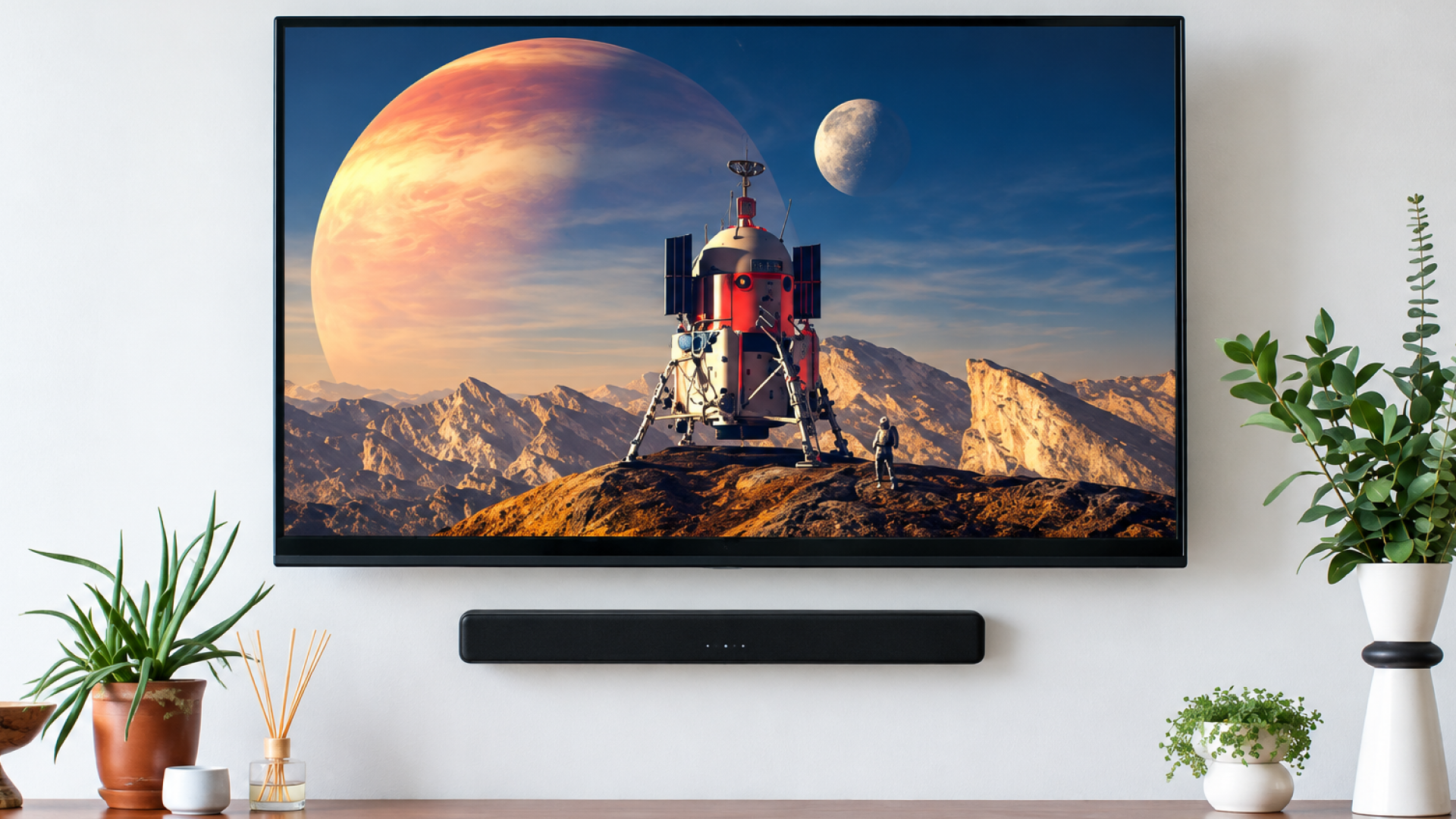
In most installations, the soundbar is positioned directly below the television and centered horizontally with the screen.
This arrangement works well because it keeps the audio source visually connected to the picture. When dialogue comes from a soundbar positioned near the screen, the setup can also feel more natural than having the speaker significantly off to one side.
Recommended Soundbar Position
A typical wall-mounted arrangement looks like this:
The TV is mounted at the appropriate viewing height.
The center of the television is aligned with the primary seating position.
The soundbar is centered underneath the TV.
A suitable vertical gap is maintained between the soundbar and television.
Audio and power cables are routed cleanly.
The equipment is tested before the installation is considered complete.
The exact spacing should follow the soundbar manufacturer's mounting instructions. Some soundbars have upward-firing speakers or sensors that require additional clearance.
Why Alignment Matters
Even a technically secure installation can look unfinished if the TV and soundbar are not aligned.
A few inches of horizontal misalignment can become surprisingly noticeable, particularly on a large wall. The soundbar should generally follow the centerline of the television rather than being positioned according to a nearby outlet or furniture edge.
Can a Soundbar Be Attached Directly to the TV Mount?
Sometimes, yes.
Specialized soundbar brackets are available that attach to certain TV mounting systems. These brackets can allow the soundbar to move with the television, which is particularly useful with articulating or full-motion TV mounts.
This arrangement has a practical advantage: if the TV is pulled away from the wall or adjusted to a different angle, the soundbar can remain positioned with it.
However, compatibility matters.
The TV mount, soundbar bracket, television, and soundbar all need to work together. The mounting hardware must also be appropriate for the equipment and installation surface.
When a TV-Mounted Soundbar Makes Sense
Attaching the soundbar to the TV mount can be useful when:
The TV uses a full-motion mount
The soundbar needs to move with the screen
Wall space below the TV is limited
A floating appearance is desired
The soundbar and TV need to maintain consistent alignment
A separate wall-mounted soundbar may be preferable when the TV and speaker require different positioning or when the soundbar manufacturer specifies a particular mounting method.
Can a Soundbar Be Mounted Directly Below the TV?
Yes, and this is one of the most common soundbar installation arrangements.
The soundbar can be mounted on the wall underneath the television using compatible hardware. This is often a good choice when the goal is a clean, floating entertainment setup without a media console.
The installer needs to account for the TV's mounting height, soundbar dimensions, wall structure, cable connections, and manufacturer-recommended clearances.
How Much Space Should Be Between a TV and Soundbar?
There is no universal measurement that applies to every TV and soundbar combination.
The manufacturer's installation instructions should take priority. Some soundbars need clearance for speakers, sensors, or upward-firing audio. The television may also have controls or sensors located along its lower edge.
A small, visually balanced gap is often preferred, but the correct distance is ultimately determined by the equipment and installation requirements.
What Types of Walls Can Support a Soundbar?
Soundbars can be installed on several types of walls, but the mounting method needs to match the surface.
Common installation surfaces include:
Wood-stud walls
Brick
Concrete
Stone or masonry surfaces
Other solid structural materials
Drywall installations require careful consideration of where the studs are located and what type of anchors or mounting hardware are appropriate.
Brick and concrete require different fastening methods. Drilling into masonry is not the same as securing hardware into a wood stud, so the mounting hardware and installation technique need to be selected accordingly.
Why Wall Material Matters
A soundbar may be lighter than a television, but it still needs secure support.
Using unsuitable anchors or relying on weak attachment points can create unnecessary risk. The same principle applies to the TV mount itself. The wall surface, hardware, equipment weight, and mounting system should all be considered together.
What Happens to the Cables When a Soundbar Is Mounted?
Cable management is one of the biggest differences between a basic installation and a professionally finished entertainment setup.
A wall-mounted soundbar typically requires power and an audio connection to the television or another device. Depending on the equipment, connections may include HDMI ARC or eARC, optical audio, Bluetooth, or other supported connection methods.
The cable path should be planned before the equipment is secured.
Common Cable Management Options
Depending on the room and wall construction, cables may be:
Routed neatly behind the TV
Concealed using an appropriate cable-management system
Routed through an existing media opening
Organized along the wall with low-profile raceways
Connected through a nearby outlet or entertainment cabinet
Not every wall can safely accommodate in-wall cable routing. Electrical and building requirements should be considered before placing cables inside a wall.
A clean installation should also leave enough cable length for future adjustments without creating unnecessary loops or visible slack.
Does Mounting a Soundbar Affect Audio Quality?
The mounting position can affect how sound reaches the listener.
Soundbars are designed to project audio toward the room, but different models use different speaker layouts. Some include upward-firing drivers, side-firing speakers, or technologies designed to create a wider soundstage.
Blocking those speakers or placing the soundbar too close to another surface can interfere with the way the system is designed to operate.
Soundbar Placement Best Practices
Before mounting the speaker, check the manufacturer's recommendations for:
Required clearance
Speaker direction
Wall-mount orientation
Minimum distance from the television
Sensor visibility
Recommended listening position
Compatibility with mounting brackets
A soundbar should also be centered with the television whenever practical. This helps keep the visual arrangement balanced and places the primary audio source close to the center of the screen.
Should the TV or Soundbar Be Mounted First?
Planning should happen before either component is permanently installed.
In many professional installations, the TV mounting position is established first because the television is the larger and visually dominant component. The soundbar position can then be determined in relation to the TV.
This does not mean the TV must physically be mounted before the soundbar hardware is prepared.
A Better Installation Sequence
A careful installation generally involves:
Inspecting the wall and determining suitable mounting points.
Checking the TV and soundbar dimensions.
Confirming bracket and hardware compatibility.
Establishing the TV's desired viewing position.
Planning soundbar placement and clearance.
Planning power and signal cable routing.
Installing the mounting hardware.
Mounting the TV and soundbar.
Connecting the equipment.
Testing picture, audio, and remote-control functionality.
This planning reduces the chance of having to reposition equipment after installation.
What If the TV Is Already Mounted?
A soundbar can usually still be installed after the television has been mounted.
However, the existing TV position should be checked before deciding where the soundbar will go. There may be limited wall space, hidden cables, furniture below the screen, or an existing mounting system that affects the installation.
If the TV is too low, adding a soundbar underneath it may make the entire setup feel cramped. If it is too high, the soundbar may not solve the larger viewing-height issue.
This is why soundbar installation is often easiest when planned at the same time as TV wall mounting.
Can a Soundbar Be Mounted Under a TV Over a Fireplace?
It can be possible, but mounting a TV and soundbar above a fireplace requires additional planning.
Heat exposure, viewing height, wall construction, clearance requirements, and cable routing all need to be considered. The soundbar itself may also have manufacturer-specific limitations concerning heat and placement.
A fireplace installation should never be treated as a standard wall-mounting job simply because the equipment can physically fit above the mantel.
The location should be evaluated before installation, particularly when the fireplace is regularly used.
Common Mistakes to Avoid With TV and Soundbar Installation
A few installation mistakes can create problems that are easy to prevent with proper planning.
Mounting the Soundbar Too Low
A large gap between the television and soundbar can make the setup look disconnected. It can also leave cables more exposed than necessary.
Ignoring Speaker Clearance
A soundbar should not be installed in a position that blocks or restricts its intended speaker output.
Choosing Hardware Without Checking Compatibility
Not every soundbar bracket works with every soundbar or TV mounting system. Hardware should be matched to the specific equipment.
Forgetting About Cable Connections
HDMI, optical, power, and other cables need enough room to connect properly. Ports should remain accessible when possible.
Mounting Everything Before Testing
A picture may look fine while the audio connection is not working correctly. Testing the television, soundbar, and connected devices before finishing prevents avoidable troubleshooting later.
Treating Cable Management as an Afterthought
Visible cables can undermine an otherwise clean wall-mounted installation. Cable routing should be planned before the TV and soundbar are secured.
Professional TV and Soundbar Installation: What Should Be Included?
A complete installation should go beyond simply attaching hardware to the wall.
A professional AV installation may include assessment of the wall, mounting hardware selection, precise alignment, soundbar positioning, cable management, equipment connections, and functional testing.
For homeowners, this can be particularly helpful when the installation involves a large television, unusual wall material, a full-motion mount, concealed cables, or multiple entertainment devices.
A professional installer can also coordinate related services such as Smart TV setup, TV relocation, network wiring, cable management, and removal of an old television when those services are needed as part of the same project.
For businesses, proper installation can be useful in conference rooms, waiting areas, offices, restaurants, retail spaces, and other commercial environments where clean presentation and reliable equipment operation matter.
When Should You Hire a Professional?
DIY mounting may be reasonable for someone who is comfortable identifying wall structure, selecting appropriate hardware, and working with the equipment manufacturer’s instructions.
Professional installation is worth considering when:
The TV is large or difficult to handle safely
The wall is brick, concrete, or another masonry surface
A full-motion mount is being used
The soundbar needs a specialized bracket
Cables need to be concealed
The TV is being mounted above a fireplace
Multiple devices need to be connected
The television needs to be relocated
Network wiring is part of the installation
The installation is for a commercial space
The goal is not simply to make the equipment stay on the wall. The finished system should be secure, aligned, connected correctly, and practical to use.
How a Combined TV and Soundbar Installation Can Improve a Room
Mounting the television and soundbar as one coordinated setup can make a room feel more organized.
A wall-mounted TV eliminates the need for a large piece of furniture in some rooms, while a mounted soundbar keeps the audio system visually close to the screen.
The result can be especially effective in smaller rooms where floor space is limited.
It also creates an opportunity to address several problems at once: awkward cable placement, uneven alignment, outdated equipment positioning, and difficult-to-reach connections.
For homeowners upgrading an entertainment area, combining TV mounting, soundbar installation, TV setup and installation, and cable management into one planned project can be more practical than completing each task separately.
Practical Checklist Before Your Installation
Before an installer arrives, have the following information available if possible:
TV make and model
TV size
Soundbar make and model
Soundbar mounting hardware, if already purchased
TV mounting bracket, if already purchased
Preferred TV location
Preferred viewing position
Location of nearby electrical outlets
Existing HDMI or optical cables
Connected devices such as streaming boxes or game consoles
Any special wall conditions
Whether old equipment needs to be removed
You do not need to know every technical detail. The purpose of the checklist is simply to help identify potential installation requirements before work begins.
What Is the Best Way to Mount a Soundbar With a TV?
For most wall-mounted entertainment systems, the best approach is to center the soundbar below the television, maintain the manufacturer's required clearance, use compatible mounting hardware, and plan the cable route before installation.
If the TV uses a full-motion bracket, a compatible TV-mounted soundbar bracket may provide a particularly clean arrangement because the speaker can move with the screen.
For a fixed TV installation, a separate wall-mounted soundbar can work equally well when properly aligned.
There is no single mounting method that is correct for every room. The best solution depends on the equipment, wall, viewing position, cable requirements, and manufacturer's installation guidelines.
Conclusion
A soundbar can usually be mounted as part of a TV installation, and coordinating the two installations can produce a cleaner, better-aligned entertainment setup. The soundbar may be mounted directly below the TV, secured separately to the wall, or attached to a compatible TV mounting system.
The key is proper planning. Wall construction, mounting hardware, speaker clearance, TV height, soundbar compatibility, cable routing, and equipment connections should all be considered before installation begins.
A well-installed TV and soundbar should look like they belong together rather than appearing to be two separate pieces of equipment added at different times. Whether the project involves a living room, bedroom, media room, office, or commercial space, careful installation helps create a setup that is secure, organized, and comfortable to use.
If the project also involves Smart TV setup, cable concealment, TV relocation, network wiring, or removal of an existing television, those tasks can be planned around the primary TV and soundbar installation.
Frequently Asked Questions
1. Can a soundbar be mounted directly with a TV installation?
Yes. A soundbar can usually be installed during the same project as a wall-mounted TV. It can be mounted below the TV on the wall or attached to a compatible TV mounting system, depending on the equipment and installation requirements.
2. Should a soundbar be mounted above or below the TV?
A soundbar is commonly mounted below the TV because this keeps the primary audio source close to the screen and creates a balanced appearance. The manufacturer's placement and clearance instructions should always take priority.
3. Can a soundbar be attached to a TV wall mount?
Yes, if the TV mount and soundbar support a compatible soundbar bracket. This setup can be particularly useful with full-motion TV mounts because the soundbar can move with the television.
4. How much space should be between a TV and soundbar?
There is no universal spacing requirement. The appropriate distance depends on the TV, soundbar design, speaker configuration, sensors, and manufacturer's recommendations. The soundbar should have enough clearance to operate as designed.
5. Can a soundbar be mounted on drywall?
Yes, but the mounting method must be appropriate for the wall construction and soundbar weight. Stud locations, suitable anchors, and manufacturer-approved hardware should be considered before installation.
6. Can a soundbar be mounted on a brick or concrete wall?
Yes. Soundbars can be mounted to masonry surfaces when the correct drill bits, anchors, fasteners, and mounting hardware are used. Brick and concrete require different installation methods than standard drywall.
7. Can TV and soundbar cables be hidden?
In many installations, cables can be organized or concealed using suitable cable-management methods. The exact approach depends on the wall construction, electrical requirements, equipment connections, and whether in-wall routing is appropriate.
8. Can a soundbar be installed if the TV is already mounted?
Usually, yes. The existing TV position should first be evaluated to determine available space, cable access, soundbar clearance, and the best mounting location. A previously mounted TV does not necessarily need to be removed.
9. Can a soundbar be mounted with a full-motion TV?
Yes, provided the soundbar bracket and TV mounting system are compatible. A TV-mounted soundbar bracket can allow the speaker to move with the screen, which can be useful when the television is tilted or pulled away from the wall.
10. Should TV mounting and soundbar installation be done together?
Planning both at the same time can make alignment, mounting height, cable management, and connection routing easier. It also allows the TV and soundbar to be treated as one complete entertainment system rather than separate installations.